Omaha, United StatesJune 7, 202670.3 mi — Half Distance2 min readPublished April 9, 2026Updated July 4, 2026
Share
01·Course Characteristics
The Measure of Omaha 70.3
A deceptively challenging Heartland course combining a calm, friendly swim with a relentlessly rolling, wind-exposed bike leg and a flat, sun-baked run featuring multiple pedestrian bridge crossings.
Climate
29°C
Peak air · water 22-24°C · early June
Conditions
Exposed
Open farmland winds · high humidity · zero run shade
Elevation
890 m
Bike gain · relentless Midwest rollers · net downhill
Difficulty
7 / 10
A gentle reservoir swim is offset by nearly 900 meters of windy, rolling bike climbs and a highly exposed, hot concrete run.
This edition has passed
Training for a future IRONMAN 70.3 Omaha?
Registration for the next edition opens on a rolling basis. Start building your base now and we'll size a full plan the moment a new date is set.
A single-loop, clockwise, out-and-back swim in the calm, no-wake waters of Lake Cunningham. With negligible currents and a rolling start format, it offers a highly controlled and comfortable environment to begin your race.
02
Bike
The Heartland Rollers
Lake Cunningham to Downtown
DISTANCE
90 km
FORMAT
Point-to-point
ELEVATION
890 m
TERRAIN
Rolling & open
WIND
6-12 mph gusts
A net-downhill, point-to-point course through Douglas County farmland that features rolling hills and open, wind-exposed sections. The first 27 kilometers are highly rolling, followed by a flat stretch, more hills, and a final flat 11-kilometer cruise into downtown Omaha.
03
Run
The Bridge Crossings
Missouri Riverfront Trail
DISTANCE
21.1 km
LOOPS
Two-loop
ELEVATION
55-81 m
SURFACE
Paved concrete
SHADE
Virtually none
PEAK TEMP
26-29°C
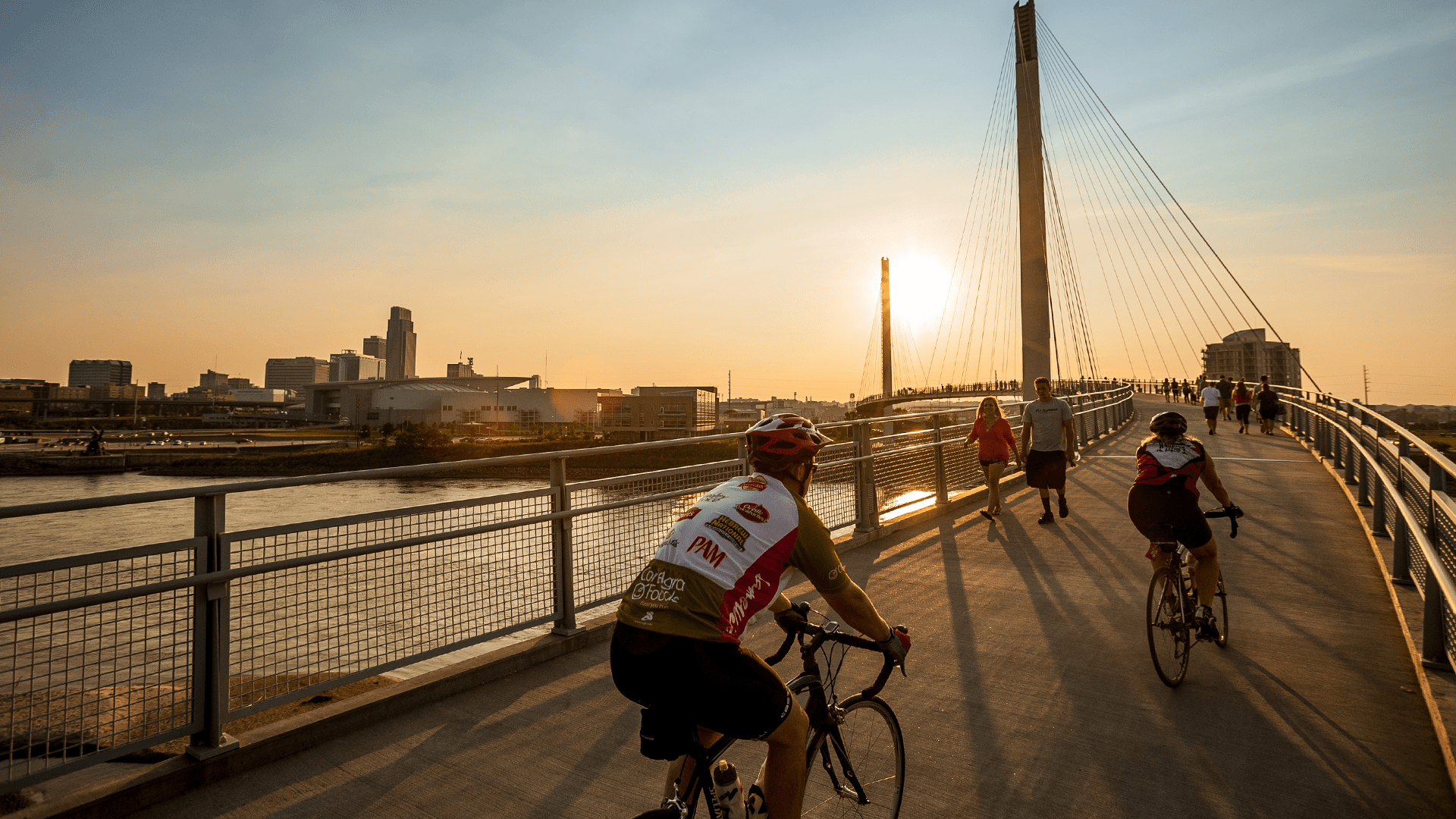
A flat, two-loop figure-eight course along the Missouri River paved paths with zero shade and high sun exposure. You will cross the Bob Kerrey Pedestrian Bridge four times total, facing a 3% incline to the apex on each crossing.
03·AVG beginners' Training Timeline
From zero to the finish line
16 weeks
This 16-week progression is tailored to Omaha's rolling bike course and highly exposed run. By starting with a strong aerobic foundation, we transition to rolling-hill strength before building heat tolerance and race-specific pacing, ensuring you arrive both physically robust and logistically prepared.
Today · WK 0Race Day
WK 1–4
Aerobic Foundation
Build a strong aerobic base and establish consistent volume across all three disciplines.
WK 5–8
Strength & Rolling Hills
Develop cycling strength to tackle the Midwest rollers and build run durability.
WK 9–12
Specific Endurance & Pacing
Incorporate race-pace brick workouts and wind simulation to prepare for the exposed bike leg.
WK 13–14
Heat & Peak Specificity
Execute peak-volume training with active heat acclimatization to handle the exposed run.
WK 15–16
Taper & Strategy
Reduce volume to shed fatigue while dialing in split-transition logistics and pacing.
Adapts to your fitness, schedule & recovery every week.
Midday temperatures can reach 29°C with high humidity, so proactive cooling is vital. Pour cold water and ice down your tri-suit at every run aid station to control your core temperature under the unshaded sun.
Fuel & hydration
Due to the heat and humidity, plan for aggressive hydration and high sodium replenishment. Consume your nutrition on the flatter or descending portions of the bike course to avoid breathing and choking issues during rolling climbs.
Pacing
Conserve your legs on the hilly first 27 kilometers of the bike to avoid burning out early. On the run, pace yourself conservatively during the four 3% grade bridge ascents to maintain a steady tempo on the flat concrete.
Gear & logistics
This is a split-transition race, meaning you must check your bike and T1 gear at Lake Cunningham on Saturday. On race morning, take the free event shuttles from downtown to the swim start, allowing at least 45 minutes for travel.
Frequently Asked Questions
What is the water temperature and wetsuit status for the IRONMAN 70.3 Omaha swim?
The expected water temperature in Lake Cunningham is typically between 72°F and 76°F (22.2°C to 24.4°C), making it highly likely to be wetsuit-legal under the 76.1°F cutoff. However, because temperatures can hover close to the limit in early June, you should bring a swimskin as a backup. The swim itself is a calm, clockwise single-loop with virtually no current due to the reservoir's strict no-wake regulations.
How difficult is the bike course at IRONMAN 70.3 Omaha?
The 56-mile point-to-point bike course is surprisingly demanding, featuring 2,921 feet of total elevation gain characterized by rolling 'Midwest hills' rather than long climbs. You will navigate rolling hills over the first 17 miles, followed by a flat 12-mile stretch, another 18 miles of rollers, and a final flat 7-mile cruise into downtown Omaha. Be prepared for open rural segments where strong, gusty headwinds and crosswinds require smart pacing to save your legs.
How do split transitions and logistics work for IRONMAN 70.3 Omaha?
This race uses a split-transition setup, with T1 at Lake Cunningham and T2 downtown near the Missouri River, requiring careful planning. You must check your bike and T1 gear bag at Lake Cunningham on Saturday. On race morning, parking is banned at the swim start, so you must catch the official event shuttles from downtown or Northwest High School and allow at least 45 minutes for the ride.
What is the run course like for IRONMAN 70.3 Omaha?
The 13.1-mile run is a flat, two-loop figure-eight along the Missouri River paved trails, but it is highly exposed to the midday sun with virtually no shade. The main physical challenges are the four crossings over the Bob Kerrey Pedestrian Bridge, which require climbing a half-mile section at a 3% grade during each crossing. Expect temperatures to reach 79°F to 84°F, meaning you should use every aid station for active cooling like putting ice down your tri-suit.
What weather conditions should I expect on race day in Omaha?
You should prepare for typical midwestern early-summer conditions, with cool morning temperatures starting between 57°F and 62°F and rising to midday highs of 79°F to 84°F. High humidity and high dew points are very common in eastern Nebraska during June. Additionally, be ready for winds of 6 to 12 mph that can feel much stronger and gustier across the open farmlands on the bike course.
Your Personalized Plan
Stop guessing your intervals. Train for this course.
FE26 builds your plan around your Strava data, your real schedule, and the exact demands of IRONMAN 70.3 Omaha— then adapts every week to how you actually perform.