IRONMAN 70.3 Rio de JaneiroTraining Plan & Race Guide 2026
Rio de Janeiro, BrazilAugust 9, 202670.3 mi — Half Distance2 min readPublished July 8, 2026
Share
01·Course Characteristics
Tactical and fast under Rio skies
A flat but highly technical course featuring ocean swells, eight GPS-blind bike tunnels, and an exposed run. Success in Rio requires strict effort-based pacing and aggressive humidity-focused hydration.
Climate
21°C
Peak air · water 20-22°C · high winter humidity
Conditions
Humid
Atlantic swells · zero run shade · GPS tunnel blackouts
Elevation
420 m
Bike gain · mostly flat with minor tunnel ramps
Difficulty
5.5 / 10
Flat profiles are offset by ocean swells, eight GPS-deprived tunnels, a split transition, and high humidity.
This edition has passed
Training for a future IRONMAN 70.3 Rio de Janeiro?
Registration for the next edition opens on a rolling basis. Start building your base now and we'll size a full plan the moment a new date is set.
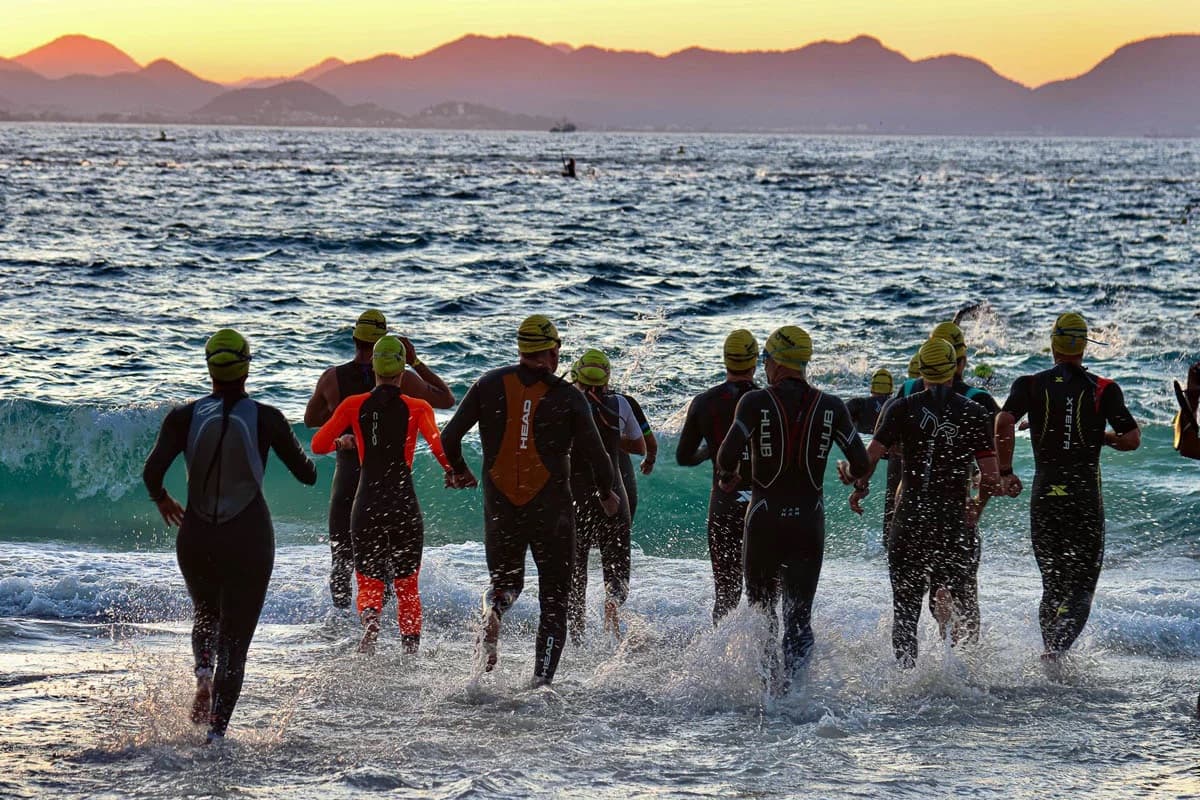
Starting near Copacabana Fort, this single-loop swim is set in the open Atlantic Ocean. You will encounter rolling swells and tidal currents that demand strong sighting. A rolling start helps disperse the field before you navigate the bay.
02
Bike
The Tunnel and Coast Express
Copacabana to Aterro do Flamengo
DISTANCE
90 km
ELEVATION
420 m
LOOPS
3 flat loops
TECHNICAL
8 tunnel passes
SURFACE
Asphalt
A point-to-point transfer leads to three flat, fast loops in the city center. You must navigate eight tunnel crossings where GPS signals will drop completely, requiring effort-based pacing. Watch for sharp turnarounds and a brief, steep ramp exiting T1.
03
Run
The Exposed Flamengo Park
Aterro do Flamengo
DISTANCE
21.1 km
ELEVATION
111 m
LOOPS
3 loops
SURFACE
Asphalt & grass
SHADE
None
This flat, three-loop run winds around Aterro do Flamengo park. The course is highly scenic but completely exposed to the elements, making solar radiation intense if skies clear. Be cautious on the grass sections near transition, which become highly slippery when wet.
03·AVG beginners' Training Timeline
From zero to the finish line
16 weeks
This 16-week progression is custom-tailored to conquer Rio's specific technical challenges. We build your open-water endurance early to handle Atlantic swells, transition to effort-based bike power to counter tunnel GPS blackouts, and incorporate heat-adaptation strategies so you can thrive on the exposed run.
Today · WK 0Race Day
WK 1–4
Aerobic Foundation
Build swim endurance for open water and establish a baseline aerobic volume.
WK 5–8
Technical & Strength
Develop cycling power for flat-loop accelerations and practice effort-based pacing.
WK 9–12
Race-Specific Build
Integrate unshaded brick runs and master high-humidity hydration strategies.
WK 13–16
Peak & Taper
Finalize pacing strategies without GPS, sharpen speed, and taper for race day.
Adapts to your fitness, schedule & recovery every week.
While winter air temperatures of 17-21°C feel mild, high coastal humidity limits sweat evaporation. Grab ice and water at every aid station on the run to douse your head and core, preventing overheating under the fully exposed sun.
Fuel & hydration
Aim for high sodium intake—at least 700-1000mg of sodium per hour—to counter heavy sweating in the dense humidity. Consume 60-90 grams of carbohydrates per hour on the bike, utilizing your own aerobar hydration system to bypass technical aid stations safely.
Pacing
Ignore GPS speed inside the eight bike tunnels; monitor your power meter or rely strictly on heart rate and perceived exertion. Keep your effort capped during the flat bike loops to save your legs for the intense, unshaded three-loop run.
Gear & logistics
This is a split transition: pack your run gear into the Red Bag and check it at T2 (Marina da Glória) on Saturday, then rack your bike at T1 (Copacabana Fort). Opt for a mid-depth front wheel to handle coastal crosswinds, and choose shoes with reliable grip for wet grass.
Frequently Asked Questions
What is the water temperature for the IRONMAN 70.3 Rio de Janeiro swim and are wetsuits allowed?
The water temperature in Copacabana Bay typically averages between 20°C and 22°C (68°F to 71.6°F) in August. Because of these mild temperatures, wetsuits are traditionally legal for age-group athletes. Be prepared for potential ocean swells and currents during this single-loop Atlantic Ocean swim, which starts near the historic Copacabana Fort.
How hard is the IRONMAN 70.3 Rio de Janeiro bike course?
The 90 km bike course is rated as moderate, featuring a fast, rolling profile with a total elevation gain of 1,254 to 1,518 feet (382 to 463 meters). While the terrain is mostly flat, the main technical challenges include negotiating sharp turnarounds, a short uphill ramp out of transition, and passing through eight tunnels where you will lose GPS signal. To manage your pacing effectively through these GPS blackouts, you should rely strictly on your power meter or perceived effort.
What are the logistics for the split transition at IRONMAN 70.3 Rio de Janeiro?
This race utilizes a split transition setup where Transition 1 is at Copacabana Fort and Transition 2 is located 10 kilometers away at Marina da Glória. On Saturday, you must check in your run gear bag (Red Bag) at T2 and your bike at T1. Staying in the Copacabana or Ipanema neighborhoods is highly recommended for convenient access to the swim start on race morning.
What weather conditions should I expect on race day at IRONMAN 70.3 Rio de Janeiro?
Held during the Brazilian winter in August, you can expect excellent racing temperatures ranging from a morning low of 17°C (63°F) to an afternoon high of 21°C (70°F). Although skies are often cloudy or overcast, the coastal humidity remains very high, and if the sun breaks through, temperatures on the fully exposed run course can quickly rise up to 24°C (75°F). Because of this high humidity, you must execute an aggressive hydration and electrolyte strategy to prevent cramping.
What is the terrain like for the IRONMAN 70.3 Rio de Janeiro run course?
The 21.1 km run is a flat, scenic three-loop course consisting of smooth asphalt around the Aterro do Flamengo park. There is virtually no shade along the route, leaving you fully exposed to the sun and coastal humidity as you head toward the finish at Marina da Glória. Additionally, you should exercise caution around the transition zones, as wet weather can make the grassy areas quite slippery, especially if you are wearing carbon-plated running shoes.
Your Personalized Plan
Stop guessing your intervals. Train for this course.
FE26 builds your plan around your Strava data, your real schedule, and the exact demands of IRONMAN 70.3 Rio de Janeiro— then adapts every week to how you actually perform.