IRONMAN 70.3 Subic Bay PhilippinesTraining Plan & Race Guide 2026
Subic Bay, PhilippinesJune 7, 202670.3 mi — Half Distance2 min readPublished April 9, 2026Updated July 23, 2026
Share
01·Course Characteristics
The Crucible of Subic Bay
Prepare for extreme tropical heat, high humidity, and a tactical split-transition course. Managing your thermal core temperature on the fast but climbing bike leg is the key to surviving the relentless run.
Climate
32°C
Peak air · water 29°C · non-wetsuit swim
Conditions
Humid
Heat index over 40°C · flat coastal run · split transition
Elevation
600 m
Bike gain · rolling expressway · SFEX climb
Difficulty
7.5 / 10
Extremely high thermal load with 29°C water and 40°C+ heat index, compounded by the SFEX bike climbs.
This edition has passed
Training for a future IRONMAN 70.3 Subic Bay Philippines?
Registration for the next edition opens on a rolling basis. Start building your base now and we'll size a full plan the moment a new date is set.
A warm, saltwater swim in the protected waters of Subic Bay starting from the Boardwalk. The water is exceptionally calm but exceptionally warm, offering zero thermal relief before the long day ahead.
02
Bike
Expressway and SFEX
T1 Boardwalk to T2 SBECC
DISTANCE
90 km
LOOPS
Point-to-point
ELEVATION
600 m
TERRAIN
Rolling with climbs
SURFACE
Concrete and asphalt
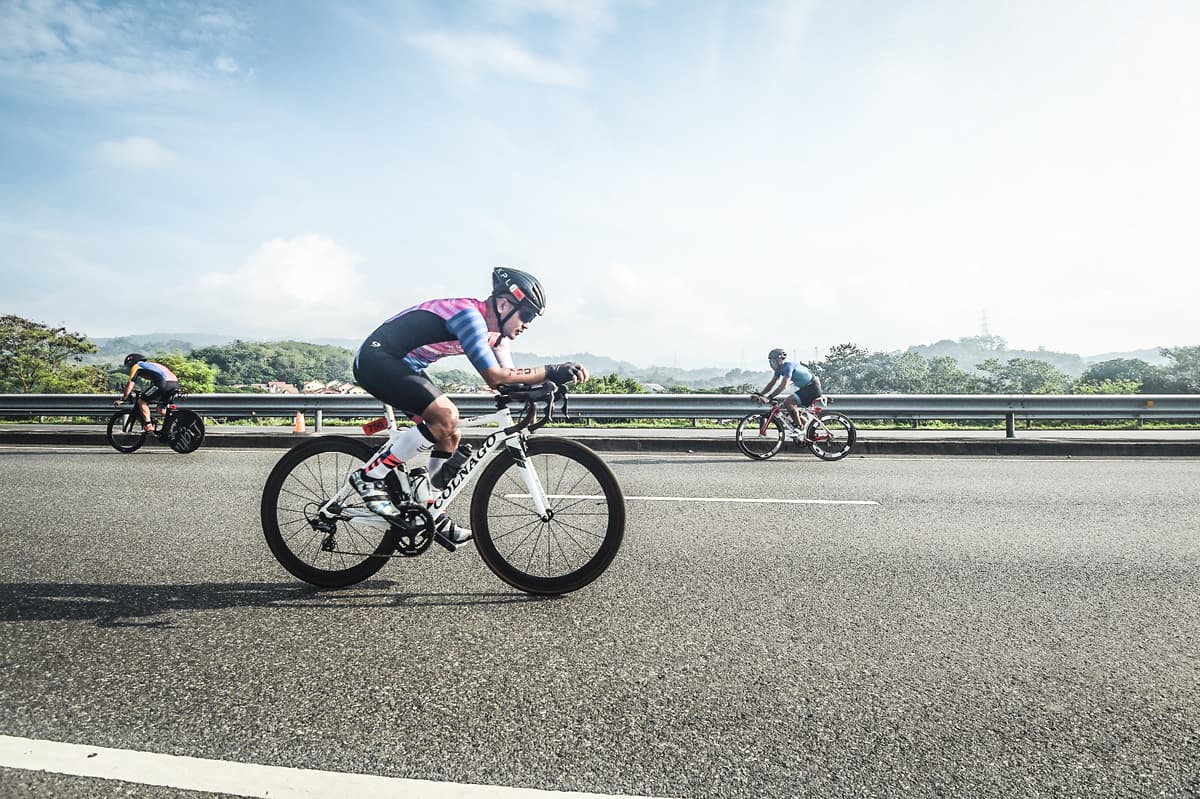
A fast but challenging ride utilizing the smooth concrete of the expressway and technical city streets, featuring a demanding climb up the SFEX. Wind and heat on the exposed highway can rapidly drain your energy reserves.
03
Run
The Remy Field Finish
SBECC to Remy Field
DISTANCE
21.1 km
LOOPS
Multi-loop
ELEVATION
Flat
SURFACE
Asphalt and track
PEAK TEMP
32°C (Feels 40°C)
A flat but punishing run on highly exposed roads ending with a finish line run-in at Remy Field. With the heat index regularly climbing past 40°C, pacing and cooling are highly critical.
03·AVG beginners' Training Timeline
From zero to the finish line
16 weeks
This 16-week progression prioritizes early aerobic durability before layering on strength work tailored for the SFEX highway climbs. The final phase focuses heavily on heat-tolerance training, ensuring your cardiovascular system is fully prepared to handle the extreme 40°C heat index waiting for you on the run.
Today · WK 0Race Day
WK 1–5
Aerobic Foundation & Heat Prep
Build a strong aerobic base and initiate low-level heat adaptation exercises.
WK 6–10
Strength & SFEX Specificity
Develop cycling torque for the SFEX climbs and increase run durability.
WK 11–14
Thermal Peak & Build
Integrate specific high-intensity sessions combined with active heat-stress protocols.
WK 15–16
Taper & Strategy
Shed fatigue while maintaining neuromuscular sharpness and finalizing the race-day hydration plan.
Adapts to your fitness, schedule & recovery every week.
With a heat index exceeding 40 degrees Celsius, execute a strict cooling protocol. Douse yourself with ice water at every single aid station, wear a white race kit, and keep your heart rate below your threshold to prevent overheating.
Fuel & hydration
Target 80 to 90 grams of carbohydrates per hour, focusing heavily on liquid and gel formats. Consume 800 to 1000 milliliters of electrolyte-rich fluid per hour to offset the massive sweat rates caused by the intense tropical humidity.
Pacing
Hold a conservative pace on the first half of the bike to preserve energy for the steep SFEX climbs. On the run, suppress your ego and run 15 to 20 seconds per kilometer slower than your standard target pace to manage the extreme thermal load.
Gear & logistics
Use deep-section wheels if the winds are light, but lower your tire pressure slightly if rain is forecast on the concrete streets. Pack separate gear bags for T1 at the Boardwalk and T2 at the SBECC, and walk the flow of both transition areas the day before.
Frequently Asked Questions
What are the swim conditions and water temperature for IRONMAN 70.3 Subic Bay?
The 1.2-mile (1.9 km) swim takes place in a highly protected bay where the water temperature is extremely warm, averaging around 84°F (29°C). Because of these high temperatures, you should prepare for a non-wetsuit swim. Focus your training on staying calm and pacing yourself conservatively in warm water.
How do logistics work with the split transition at IRONMAN 70.3 Subic Bay?
This race utilizes a split-transition layout, with Transition 1 (T1) located at the Subic Bay Boardwalk and Transition 2 (T2) alongside the Finish Line at the Subic Bay Exhibition and Convention Center (SBECC) / Remy Field. To ensure a smooth race day, it is highly recommended to walk through both transition areas the day before the event to familiarize yourself with the flow. Booking accommodations within the Subic Bay Freeport Zone (SBFZ) will also make managing these two distinct locations much easier.
What is the weather and heat index like for IRONMAN 70.3 Subic Bay in June?
You should prepare for highly humid and hot conditions on June 7, 2026, with air temperatures ranging from a low of 79°F (26°C) to a high of 89°F (32°C). More importantly, the feels-like heat index frequently exceeds a grueling 104°F (40°C). Hydration, electrolyte replenishment, and pacing will be the most critical components of your race strategy.
How should I set up my bike for the Subic Bay 70.3 bike course?
You should trim your gearing specifically to handle the climbing sections on the Subic Freeport Expressway (SFEX). Additionally, if wet weather is forecasted for race day, slightly lower your tire pressure to improve traction on the technical city streets and smooth expressway concrete. These adjustments will keep you safe and efficient across the 56-mile (90 km) course.
What is the best airport to fly into for IRONMAN 70.3 Subic Bay?
The most convenient option is to fly directly into Clark International Airport (CRK), which is only a 45-to-60-minute drive to Subic Bay via the SCTEX. Alternatively, you can fly into Manila's Ninoy Aquino International Airport (MNL), though this will require a longer 2.5-to-3-hour drive to reach the venue. Booking your lodging within the Subic Bay Freeport Zone (SBFZ) will keep you close to both transition areas.
Your Personalized Plan
Stop guessing your intervals. Train for this course.
FE26 builds your plan around your Strava data, your real schedule, and the exact demands of IRONMAN 70.3 Subic Bay Philippines— then adapts every week to how you actually perform.