IRONMAN 70.3 Vitoria-GasteizTraining Plan & Race Guide 2026
Vitoria-Gasteiz, SpainJuly 12, 202670.3 mi — Half Distance2 min readPublished April 5, 2026Updated July 4, 2026
Share
01·Course Characteristics
Fast flats and historic twists
A pristine lake swim and rolling, ultra-smooth bike course set up a fast day, but tight cobblestone turns and afternoon heat demand intelligent pacing and flawless split-transition logistics.
Climate
28°C
Peak air · water 20-22°C · mid-July
Conditions
Exposed
Windy plains · minimal run shade · 76% average humidity
Elevation
500 m
Bike gain · rolling · brief 10% ramp
Difficulty
5.5 / 10
A moderate rating reflects a calm reservoir swim and exceptionally fast rolling bike, balanced by a technical, unshaded run on cobblestones and complex split-transition logistics.
This edition has passed
Training for a future IRONMAN 70.3 Vitoria-Gasteiz?
Registration for the next edition opens on a rolling basis. Start building your base now and we'll size a full plan the moment a new date is set.
A calm, pristine single-loop freshwater swim in Ulibarri-Gamboa Lake. The drinking-quality water offers negligible currents and clean conditions, followed by a short run from the water's edge to the first transition.
02
Bike
Alava Plain Cruise
Scenic Álava Region Loop
DISTANCE
90 km
LOOPS
1 loop
ELEVATION
500 m
TERRAIN
Rolling & flat
SURFACE
Smooth tarmac
WIND
Moderate plain exposure
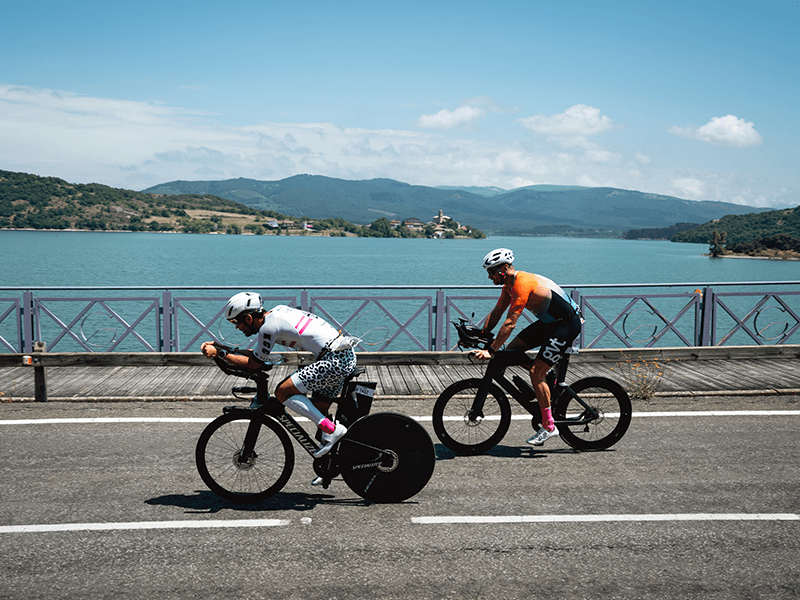
A fast, single-loop point-to-point course through the Álava plain on spectacularly smooth, closed roads. Pacing is smooth on rolling hills under 3% gradient, except for a challenging short 10% ramp near the end as you head back into the city.
03
Run
Historic Old Town Loops
Vitoria-Gasteiz Downtown Skyline
DISTANCE
21.1 km
LOOPS
2 loops
ELEVATION
240 m
SURFACE
Cobblestone & asphalt
SHADE
Minimal
PEAK TEMP
25-28°C
A flat, two-loop half marathon winding through medieval cobblestone streets and urban green areas. The course features tight twists and multiple 180-degree turns that disrupt your rhythm, with little shade to shelter you from the afternoon sun.
03·AVG beginners' Training Timeline
From zero to the finish line
16 weeks
This 16-week progressive training program is designed to build the specific aerodynamic endurance and joint resilience needed for the Vitoria-Gasteiz course. By prioritizing sustained aerobar riding, high-torque climbing prep, and run agility, you will transition smoothly from Lake Landa to the final historic red carpet.
Today · WK 0Race Day
WK 1–4
Aerobic Base & Technique
Establish your aerobic baseline and refine swim sighting and cycling efficiency.
WK 5–8
Strength & Aerobar Endurance
Build muscular endurance to sustain a comfortable aerobar position and handle low-cadence climbing.
WK 9–13
Specific Cadence & Technical Run
Introduce race-pace brick workouts and run agility drills to prepare for Vitoria-Gasteiz's twisty cobblestones.
WK 14–16
Peak, Heat Prep & Taper
Taper volume while maintaining intensity, incorporating active heat adaptation strategies for the run.
Adapts to your fitness, schedule & recovery every week.
Expect cool morning air warming up to 28°C by the afternoon. Use the early aid stations on the run to pour water and use sponges over your neck to keep core temperatures down.
Fuel & hydration
Utilize the official on-course Precision Hydration and Maurten gels. Target 60-90 grams of carbohydrates and 600-800ml of fluids per hour, adjusting upwards if afternoon humidity and heat rise.
Pacing
Hold back on the fast, flat stretches of the bike to save your legs for the technical run. Smoothly ride the sub-3% grades and keep your effort controlled on the final steep 10% ramp.
Gear & logistics
Prepare your split-transition bags (Blue for T1, Red for T2) on Saturday. Use a deep-section front wheel or disc rear wheel for the fast bike course, but be ready for moderate crosswinds on the plains.
Frequently Asked Questions
What is the water temperature and wetsuit policy for the IRONMAN 70.3 Vitoria-Gasteiz swim?
The water temperature in Ulibarri-Gamboa Lake typically ranges from 20°C to 22°C (68°F to 71°F) on race day. This means the 1.9 km single-loop swim is usually wetsuit-legal under IRONMAN rules. You can expect very clean, calm, drinking-quality freshwater with negligible currents as you swim in Landa Provincial Park.
How hard is the bike course at IRONMAN 70.3 Vitoria-Gasteiz?
The bike course is relatively fast and beginner-friendly, featuring a single 90 km loop with 500 meters of total elevation gain on highly smooth tarmac. Most of the rolling terrain maintains a gentle gradient of under 3%, though you should prepare for a challenging short ramp reaching up to a 10% gradient near the end of the course. Wind exposure on the open Alava plain can be moderately high, so staying aerodynamic on a tri-bike or with clip-on aerobars is highly recommended.
What is the run course profile like for IRONMAN 70.3 Vitoria-Gasteiz?
The run is an exceptionally flat 21.1 km, two-loop urban course with approximately 240 meters of total elevation gain. It winds through the historic old town, which features tight twists, multiple 180-degree turnarounds, and cobblestone streets that can disrupt your running rhythm. Because there is minimal natural shade, managing your pacing and cooling down in the afternoon heat of up to 25°C to 28°C (77°F to 82°F) will be your primary challenge.
How do the split transitions work at IRONMAN 70.3 Vitoria-Gasteiz?
This event utilizes a split transition format where T1 is located at Lake Landa and T2 is in downtown Vitoria-Gasteiz. You will need to organize and pack your color-coded transition bags (Blue for T1, Red for T2) on Saturday before the race when you rack your bike. On race morning, you can take the official shuttle buses from the city center up to the swim start and T1.
What nutrition is provided on the course for IRONMAN 70.3 Vitoria-Gasteiz?
The official on-course aid stations will provide water, Maurten energy gels, and Precision Hydration sports drink served in 750ml bottles. It is highly recommended to establish a consistent hydration schedule on your bike using aerobar-mounted and rear bottles. For the run, make sure to utilize the available water and cooling sponges at every aid station to manage the warm afternoon temperatures.
Your Personalized Plan
Stop guessing your intervals. Train for this course.
FE26 builds your plan around your Strava data, your real schedule, and the exact demands of IRONMAN 70.3 Vitoria-Gasteiz— then adapts every week to how you actually perform.