All Race Guides

IRONMAN 70.3 Western MassachusettsTraining Plan & Race Guide 2026

Springfield, United StatesJune 7, 202670.3 mi — Half Distance7 min read

Race & Course Analysis

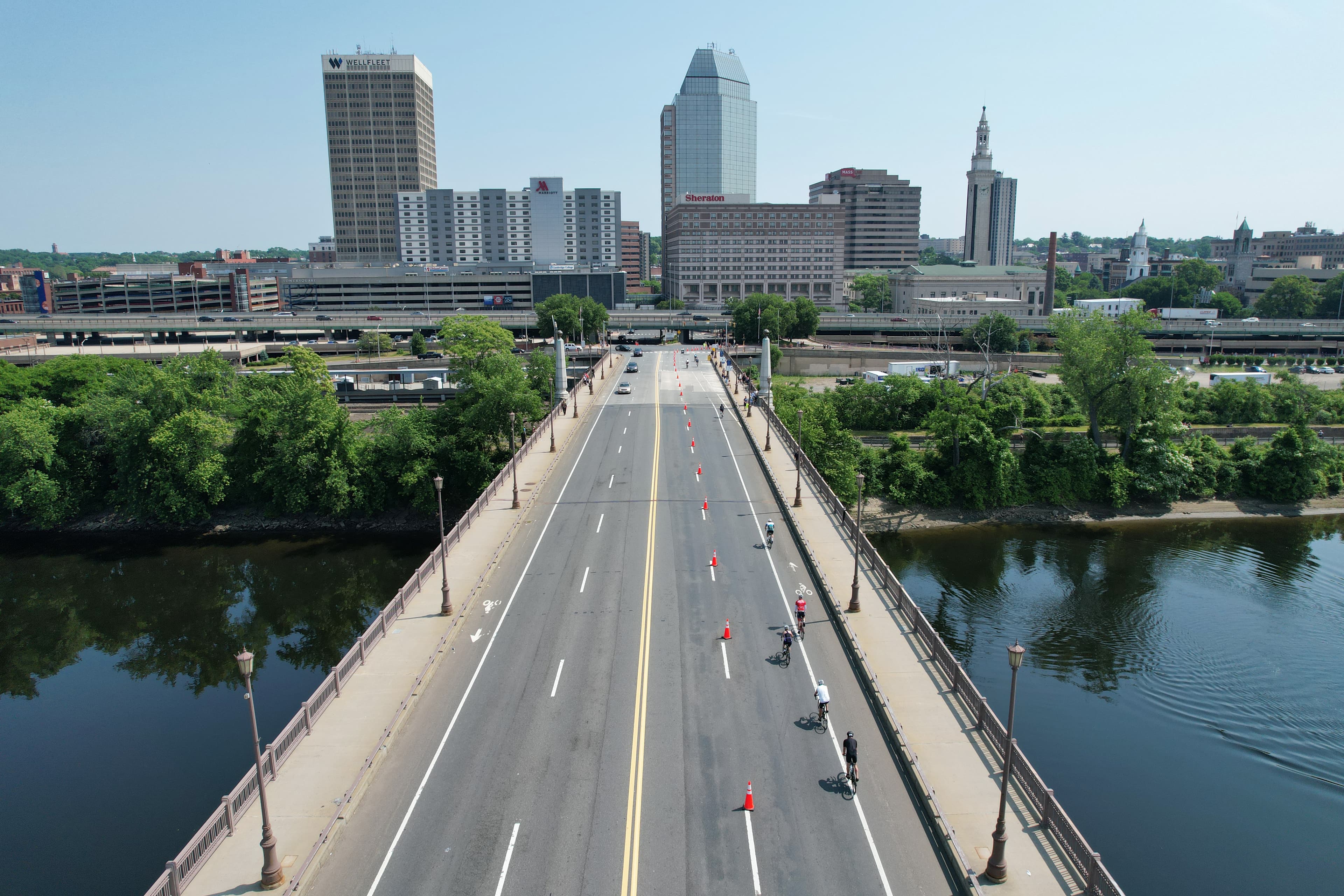
Nestled in the heart of the Pioneer Valley, IRONMAN 70.3 Western Massachusetts has quickly earned a reputation as one of the fastest and most beginner-friendly races on the North American circuit. Since its debut in 2023, the event has drawn athletes to Springfield for its unique point-to-point swim and an exceptionally flat run course. This 70.3-mile journey—consisting of a 1.2-mile downriver swim, a 56-mile rolling bike through rural New England, and a 13.1-mile riverfront run—is a prime candidate for those seeking a personal best.

While the "fast" reputation is well-deserved, the course presents a distinct set of physiological demands. The speed of the Connecticut River and the flat finish line are balanced by a mid-ride climbing section and the notorious humidity of a Massachusetts June. To succeed here, your training must bridge the gap between raw power on the hills and thermoregulatory efficiency on the run.

Swim Course

The 1.2-mile swim is a point-to-point route in the Connecticut River. Athletes are shuttled to the North End Bridge and swim downstream to the transition area at Riverfront Park. Because of the consistent downstream current, this is frequently cited as one of the fastest swims in the IRONMAN 70.3 series, with finishing times often 5 to 10 minutes faster than typical lake swims. Water temperatures historically fluctuate between 66°F and 71°F, making the event reliably wetsuit-legal.

  • Distance: 1.2 miles
  • Water Type: Freshwater River
  • Format: Rolling Start, Point-to-Point
  • Challenges: Navigating the current and maintaining a straight line between the river banks.

Training Implication: While the current provides a significant speed boost, your training should focus on open-water sighting and navigation. Because you are moving with the water, traditional "pool speed" is less critical than maintaining a high, efficient stroke rate. Incorporate sighting drills every 6–8 strokes during your long swims to ensure you are staying in the fastest part of the channel without adding unnecessary distance.

Bike Course

The 56-mile bike course is a single-loop route that heads south from Springfield into the rural landscapes of Agawam and Southwick before turning into the hills of Granville and Westfield. The course features approximately 2,118 feet of total elevation gain. Unlike mountain passes, this terrain is defined by "rolling" hills and one significant "step" climb section located between miles 15 and 30. While the scenic roads are generally well-maintained, athletes should be prepared for typical New England road textures, including occasional frost heaves or rougher asphalt patches.

  • Elevation Gain: ~2,118 feet
  • Terrain: Rolling hills with a concentrated climbing block in the second quarter.
  • Challenges: Managing effort during the Granville climbs to avoid "burning matches" before the run.

Training Implication: Success on this bike course requires muscular endurance and the ability to produce power at lower cadences. Your training plan should include "big gear" intervals on rolling terrain to simulate the Granville sections. Focus on building the strength to crest these inclines while staying within your aerobic threshold, ensuring you don't arrive at T2 with depleted glycogen stores.

Run Course

The 13.1-mile run is a two-loop, out-and-back affair along the Connecticut Riverwalk and through downtown Springfield. With only 242 feet of total elevation gain, this is a "pancake-flat" course designed for speed. However, the lack of elevation change means your muscle engagement remains constant, providing no "downhill" relief. The primary environmental challenge is the early June climate; temperatures often reach 82°F with humidity levels between 60% and 80%. While some trees line the path, large sections of the riverwalk are fully exposed to the sun.

  • Distance: 13.1 miles (two loops)
  • Terrain: Paved, exceptionally flat.
  • Challenges: High humidity and significant sun exposure on the riverfront.

Training Implication: Because the course is so flat, your training must emphasize high-cadence efficiency and heat acclimation. The "pancake-flat" profile can lead to repetitive strain, so include long, flat runs in your schedule to adapt your joints and muscles to the constant gait. Most importantly, incorporate "brick" runs in humid conditions or utilize indoor treadmill sessions with reduced airflow to trigger the sweat-rate adaptations necessary for the Springfield humidity.

Training Phase Timeline

16 weeks

Base Foundation

Wk 14 · 4 wk

Build 1: Strength

Wk 58 · 4 wk

Build 2: Specificity

Wk 912 · 4 wk

Peak Phase

Wk 1314 · 2 wk

Taper and Race

Wk 1516 · 2 wk

Plan Overview

You will begin this journey by establishing a robust aerobic base and functional strength, ensuring your body is resilient enough to handle the 16-week progression. Because the Connecticut River swim is point-to-point and current-assisted, your early sessions focus more on efficient sighting and comfort in 68-70 degree water rather than pure speed. As you move into the Build phases, the focus shifts heavily toward the bike. With over 2,100 feet of gain concentrated in the second quarter of the ride, you will perform specific strength-endurance intervals to ensure you can crest the Granville hills without depleting the energy needed for the run. This structure ensures you arrive at the most challenging part of the bike course with the power to maintain your momentum. In the final Specificity and Peak phases, you will focus on the unique demands of the Springfield environment. Since the run is exceptionally flat but highly exposed to the sun and humidity, you will incorporate brick runs after your long rides to adapt to the 80% humidity levels and 80-degree temperatures expected in June. This transition from general fitness to course-specific preparation means you will be ready to capitalize on the fast swim and flat run. By the time you reach the taper, you will have the muscular endurance to tackle the hills and the thermoregulatory efficiency to sprint down the riverfront toward the finish line.

Phase 1

Base Foundation

Wk 144 weeks

Building aerobic capacity and functional strength to prepare for higher intensity work.

Phase 2

Build 1: Strength

Wk 584 weeks

Developing muscular endurance for the 2,118 feet of rolling elevation on the bike course.

Phase 3

Build 2: Specificity

Wk 9124 weeks

Sustained race-pace efforts and heat acclimation training for high-humidity conditions.

Phase 4

Peak Phase

Wk 13142 weeks

High-intensity brick sessions and finalizing your nutrition strategy for the Granville climbs.

Phase 5

Taper and Race

Wk 15162 weeks

Reducing volume while maintaining intensity to arrive fresh and sharp for race day.

Race Day Execution

IRONMAN 70.3 Western Massachusetts Race Day Strategy

To excel at IRONMAN 70.3 Western Massachusetts, you must balance the "free speed" of the swim with the atmospheric demands of the Pioneer Valley. This guide outlines the specific execution steps needed to navigate the humidity, the rolling bike terrain, and the flat, sun-exposed run.

Weather & Climate Strategy

The primary challenge in Springfield is not the temperature, but the humidity. Early June in Massachusetts often sees dew points that can significantly impair sweat evaporation.

  • Acclimation Protocols: Start heat acclimation 10–14 days before race day. Incorporate 3–5 sessions of 45–60 minutes in a high-temperature environment (or wearing extra layers on the trainer) to trigger plasma volume expansion.
  • Manage Thermoregulation: On race day, prioritize "external cooling" early. Pour water over your head and shoulders at every aid station on the run, even if you don't feel "hot" yet. This helps maintain a lower core temperature before the humidity takes its toll in the second half of the marathon.
  • Sun Protection: The riverfront run course has high exposure. Use water-resistant, high-SPF sunscreen and consider a white cooling hat to reflect radiant heat.

Nutrition & Hydration Plan

The high humidity levels in Western Massachusetts necessitate a proactive electrolyte strategy to prevent cramping and GI distress.

  • Sodium Loading: Begin increasing your sodium intake 24 hours before the race. Aim for 500–1000mg of sodium with your pre-race dinner and again with your breakfast.
  • Hourly Targets: Aim for 60–90g of carbohydrates and 700–1000mg of sodium per hour on the bike. Because the Granville climbing section requires higher torque and concentration, front-load your nutrition on the flatter opening miles so you can focus on power and cadence during the inclines.
  • Pre-Race Timeline:
    1. 3 Hours Prior: High-carb, low-fiber breakfast (e.g., bagel with jam or oatmeal).
    2. 90 Minutes Prior: Sip on 16oz of electrolyte-rich fluid.
    3. 15 Minutes Prior: One gel with water just before entering the water at the North End Bridge.

Gear & Transition Setup

Western Massachusetts road conditions and the point-to-point swim require specific equipment choices.

  • The Swim: With water temperatures typically in the high 60s, a full-sleeved wetsuit is recommended for maximum buoyancy and to capitalize on the downstream current.
  • The Bike: Choose a mid-to-deep section wheelset (50mm–80mm). While there is climbing, the descents and flat sections are fast, and wind is rarely a major factor in the valley. Ensure your tires are inspected for "New England road wear"—frost heaves can be unforgiving on thin, worn rubber.
  • Transition (T1/T2): Remember that the swim is point-to-point. You will drop a "Swim Start Bag" at the North End Bridge; ensure this contains only what you need for the pre-race wait (disposable shoes, extra hydration). Your T1/T2 setup at Riverfront Park is compact—keep your area tidy to navigate the crowds efficiently.

Pacing & Mental Strategy

Success in Springfield is found by staying disciplined during the "fast" sections so you have the legs for the humidity-heavy finish.

  • Swim: Don't over-kick. The current is significant; focus on a high stroke rate and sighting the bridge pylons. Save your legs for the 2,100+ feet of climbing ahead.
  • Bike: Execute a "controlled burn." Use a power meter to cap your effort at 90–95% of FTP during the Granville climbs. Avoid the "hero" mentality on the rollers; the real race begins at mile 40 of the bike when many athletes start to fade from the early hills.
  • Run: The run is a "pancake-flat" speedway. Start the first 3 miles at 5–10 seconds per mile slower than your target pace. This allows your heart rate to stabilize after T2 and helps you gauge the impact of the humidity before committing to a finish-line push.
  • Mental Reset: Use the two-loop run format to your advantage. Focus only on the "next aid station" during the first loop. On the second loop, use the energy of the downtown crowds at Riverfront Park to fuel your final drive.

Travel & Logistics

Springfield’s compact race village makes it one of the most logistically friendly races on the circuit if you plan ahead.

  1. Arrival: Fly into Bradley International Airport (BDL) by Thursday or Friday morning. This allows time for a brief shake-out ride to check your shifting after travel.
  2. Lodging: Prioritize hotels within walking distance of Riverfront Park (Marriott, Sheraton, or MGM). This eliminates the stress of race-morning parking and allows for an easy walk back to your room post-race.
  3. Course Recon: If possible, drive the Granville and Westfield sections of the bike course on Friday. Seeing the "step" climb in person will help you visualize your gearing and effort levels for race day.
  4. Morning Transport: You must take the provided shuttles from the finish area to the swim start. Arrive at the shuttle pick-up 15 minutes earlier than your planned departure to avoid the final-minute rush.

Your Personalized Training Plan

Your Personal Path to IRONMAN 70.3 Western Massachusetts

While this guide provides a foundation, every athlete is unique. FE26 creates a personalized plan by analyzing:

  • Your Data: Seamless Strava integration to benchmark your current fitness.
  • Your Life: Training blocks that adapt to your real-world schedule.
  • The Course: Workouts specifically engineered for these unique race demands.
  • Your Recovery: Weekly adaptive periodization that adjusts targets based on your actual performance.

Stop guessing your intervals. Start training with a system that evolves with you.

Create Your IRONMAN 70.3 Western Massachusetts Training Plan