IRONMAN 70.3 World ChampionshipTraining Plan & Race Guide 2026
Nice, FranceSeptember 12, 202670.3 mi — Half Distance2 min readPublished April 5, 2026Updated July 23, 2026
Share
01·Course Characteristics
The Measure of Nice
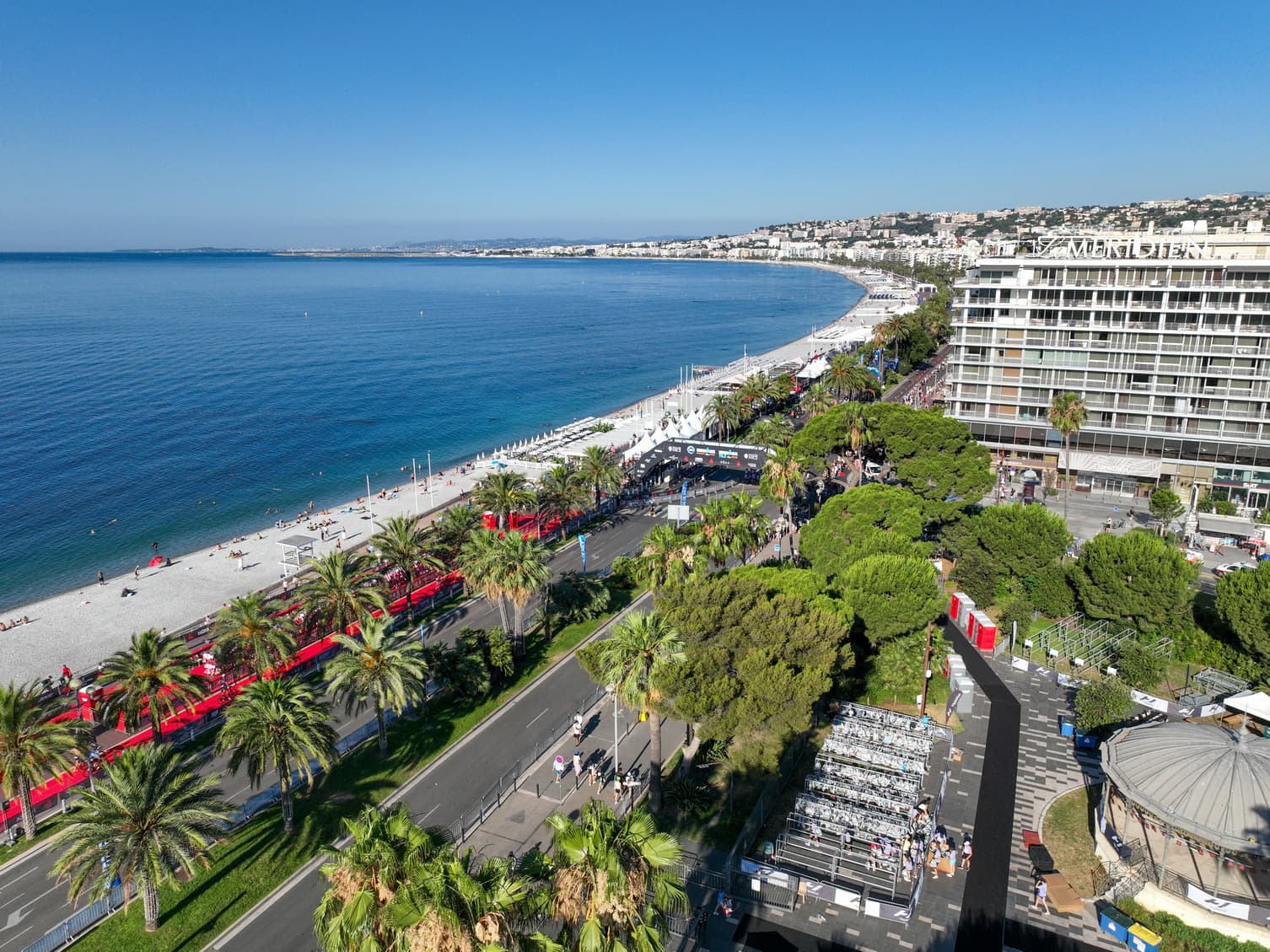
An iconic Mediterranean swim precedes a brutal alpine climb and highly technical descent, finishing with a scorching, entirely unshaded run along the Promenade des Anglais.
Climate
28°C
Peak air · water 22-24°C · mid-September
Conditions
Exposed
Saltwater swim · technical alpine descents · unshaded run
Elevation
1360 m
Bike gain · sustained alpine climbing · steep descents
Difficulty
8.5 / 10
High difficulty due to 1360 m of technical alpine climbing and a hot, completely unshaded run along the coast.
There's still hope!
Only 1 week to go — but it's not too late.
The ideal build for this course is 20 weeks, and you have 1. We'll compress the essentials into your remaining time, prioritizing the demands that matter most on this course to get you to the finish line.
A single-loop swim in the clear blue waters of the Mediterranean Sea starting from a pebble beach. Sighting can be challenging against the morning sun, and the water temperature is often right on the wetsuit-legal threshold.
02
Bike
Maritime Alps Climb
Nice Hinterland
DISTANCE
90 km
ELEVATION
1360 m
TERRAIN
Mountainous
CLIMB
Col de Vence
A spectacular but grueling route that heads straight into the Maritime Alps, featuring a long, sustained climb followed by a highly technical, fast descent. Managing your power on the climbs and maintaining focus on the steep, winding downhills is critical.
03
Run
Promenade des Anglais
Nice Waterfront
DISTANCE
21.1 km
LOOPS
Two-loop
ELEVATION
Flat
SHADE
None
PEAK TEMP
28°C
A flat, two-loop run along the iconic Promenade des Anglais, right next to the sea. While flat, it is completely exposed to the sun and heat, making thermal management your primary obstacle.
03·AVG beginners' Training Timeline
From zero to the finish line
20 weeks
A 20-week progression is ideal to safely build the specific alpine climbing power and high-speed descending confidence required for Nice. This timeline guarantees your aerobic engine and legs are fully prepared for the heavy elevation profile before transitioning to heat-tolerance training for the exposed run.
Today · WK 0Race Day
WK 1–6
Aerobic Foundation
Build a strong aerobic base and develop swimming endurance in open water.
WK 7–12
Strength & Alpine Power
Develop sustained climbing power and strength endurance to handle the Maritime Alps elevation.
WK 13–16
Technical Mastery
Integrate high-speed descending skills and high-intensity brick sessions.
WK 17–18
Heat & Specificity
Introduce heat acclimation protocols and race-pace simulations on tired legs.
WK 19–20
Taper & Sharpen
Reduce volume to shed cumulative fatigue while maintaining short intensity bursts.
Adapts to your fitness, schedule & recovery every week.
With air temperatures peaking near 28°C and zero shade on the run, aggressive cooling is mandatory. Use ice and cold water at every aid station to lower your core temperature, and wear a white, breathable race suit.
Fuel & hydration
The intense heat and alpine bike effort demand high sodium intake to prevent cramping. Aim for 80-90g of carbohydrates and 750-1000ml of fluid per hour, adjusted for the high sweat rate on the run.
Pacing
Do not burn your matches on the steep early sections of the bike climb; ride defensively to save your legs. On the run, start conservatively along the Promenade to avoid blowing up in the unshaded heat.
Gear & logistics
Bring both a wetsuit and a speedsuit due to borderline 22-24°C water, and pack old shoes for the pebble beach walk. Utilize the highly efficient tram system for transport, and ensure you pre-ride the highly technical bike descents.
Frequently Asked Questions
What is the expected water temperature for the 2026 IRONMAN 70.3 World Championship in Nice?
The average water temperature in Nice is expected to be between 22°C and 24°C (71.6°F to 75.2°F). Because this borderline temperature makes wetsuit-use highly variable, you should pack both speedsuits and wetsuits in your race gear. Additionally, be sure to bring old shoes or sandals for the walk down to the swim start due to the local pebble-strewn beach.
What is the best way to travel from the airport to the transition area in Nice?
Nice Côte d'Azur Airport is located just 10-15 minutes (5-7 km) from the transition zone. You can take the highly efficient, affordable local Tram Line 2 directly from the airport to the city center and the Promenade des Anglais. Driving is strongly discouraged during race week due to heavy road closures, extremely limited parking, and heavy traffic.
Where should I stay for the 2026 IRONMAN 70.3 World Championship in Nice?
It is highly recommended to book accommodations within walking distance of the transition area along the Promenade des Anglais or near a Tram Line 2 station. Staying near the Promenade des Anglais will ease your morning walk on race day and keep logistics simple. This eliminates the need for a rental car, as the local tram system provides convenient transit around the city.
How should I prepare for the bike course descent at the Nice 70.3 World Championship?
You should ensure you have a specialized race execution plan tailored specifically to climbing power and technical descents. It is highly recommended to pre-ride the technical bike descent in the days leading up to the race to familiarize yourself with the terrain. To ensure your gear is in perfect order, you can also check out local bike shops if you need last-minute mechanical assistance before tackling the Maritime Alps.
What weather conditions and run strategies should I expect for the Nice 70.3 World Championship?
You should expect air temperatures with afternoon highs of 24°C to 28°C (75°F to 83°F) and morning lows around 18°C to 21°C (64°F to 70°F). Because the run course is unshaded, it is critical to keep your hydration high and take sodium to prepare for the heat. Remember to factor the incredibly long transition times into your overall race execution plan.
Your Personalized Plan
Stop guessing your intervals. Train for this course.
FE26 builds your plan around your Strava data, your real schedule, and the exact demands of IRONMAN 70.3 World Championship— then adapts every week to how you actually perform.