IRONMAN Calella-BarcelonaTraining Plan & Race Guide 2026
Calella, SpainOctober 4, 2026140.6 mi — Full Distance2 min readPublished April 5, 2026Updated July 23, 2026
Share
01·Course Characteristics
The speed of Calella-Barcelona
A lightning-fast course pairing a Mediterranean swim with a rapid, flat-to-rolling bike leg and a flat, multi-loop coastal run. Success here hinges on managing early-autumn heat and maintaining a disciplined, aerodynamic posture.
Climate
22°C
Peak air · water 19-21°C · early October
Conditions
Exposed
Coastal wind · high humidity · zero run shade
Elevation
1200 m
Bike gain · fast rolling loops · flat run
Difficulty
6 / 10
A fast course profile, but the relentless coastal wind, high humidity, and full-distance volume demand respect.
There's still hope!
Only 1 week to go — but it's not too late.
The ideal build for this course is 24 weeks, and you have 1. We'll compress the essentials into your remaining time, prioritizing the demands that matter most on this course to get you to the finish line.
A single-loop swim in the Mediterranean Sea starting and ending at Calella Beach. Water is typically clear with moderate swells and a beach start and exit.
02
Bike
Coastal Speedways
Calella to Montgat
DISTANCE
180 km
LOOPS
2 loops
ELEVATION
1200 m
TERRAIN
Flat & rolling
WIND
Coastal crosswinds
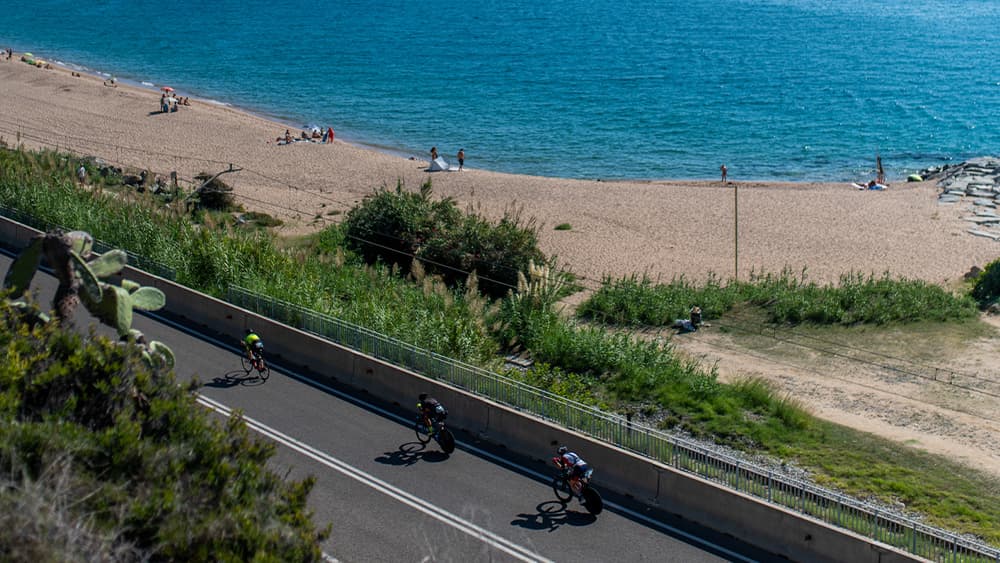
A fast, two-loop course running parallel to the coastline. While mostly flat and designed for speed, it features some rolling terrain and can be subject to coastal winds.
03
Run
The Promenade Loop
Calella Coastline
DISTANCE
42.2 km
LOOPS
3 loops
ELEVATION
100 m
SURFACE
Asphalt & dirt
SHADE
Minimal
PEAK TEMP
22°C
A completely flat, three-loop run along the Calella beach promenade. Expect massive spectator support but virtually zero shade from the afternoon sun.
03·AVG beginners' Training Timeline
From zero to the finish line
24 weeks
This 24-week plan steadily scales your volume to meet the demands of a full 226 km race. It front-loads basic aerobic capacity before transitioning into aero-position endurance and flat-running durability to prepare you for the relentless posture of the Barcelona course.
Today · WK 0Race Day
WK 1–8
Aerobic Foundation
Establish a solid endurance base across all three disciplines with low-intensity volume.
WK 9–14
Strength & Aerobic Power
Build muscular endurance on the bike and run, adding sustained intervals.
WK 15–20
Race-Specific Build
Simulate race-pace efforts, focusing on sustained aero-bar riding and flat, repetitive running.
WK 21–24
Peak & Taper
Dial in nutrition, execute key brick sessions, and taper volume to arrive fresh and ready.
Adapts to your fitness, schedule & recovery every week.
Temperatures average 22°C but high humidity and intense Mediterranean sun can make it feel much hotter. Utilize every aid station for ice and cold water to douse your head and core, keeping your heart rate stable.
Fuel & hydration
Target 80-100g of carbohydrates and 700-1000ml of fluids per hour on the bike to offset sweat loss in the humid coastal air. Carry a highly concentrated bottle of nutrition to minimize reliance on unfamiliar on-course gels.
Pacing
Avoid burning matches on the flat, tempting bike course by strictly sticking to your target power. Save your legs for the unshaded run, where a steady, conservative start will prevent a late-race collapse.
Gear & logistics
A deep-section rear wheel or disc wheel is highly effective on this flat course, though be prepared for crosswinds. Pack extra sunscreen in your transition bags and apply it at T1 and T2 to prevent severe sunburn on the exposed run.
Frequently Asked Questions
What is the swim like at IRONMAN Calella-Barcelona?
The swim takes place in the Mediterranean Sea starting and finishing on the beach in Calella, featuring a single-loop 3.8 km counter-clockwise course. You can expect warm but manageable water temperatures, usually ranging from 19°C to 22°C (66°F to 72°F), making it typically wetsuit-legal for age-groupers. The sea is generally calm, but you should prepare for mild swells and a rolling start format that helps ease race-day anxiety.
How flat is the IRONMAN Calella-Barcelona bike course?
The bike course is famously fast and mostly flat, consisting of two loops that run along the scenic coastal road between Calella and Montgat. Despite its reputation for speed, you will encounter approximately 1,200 meters of total elevation gain, primarily due to some rolling terrain and a few short, punchy climbs. Wind can also become a significant factor on the return legs, so maintaining an aerodynamic position is key.
Is the IRONMAN Calella-Barcelona run course completely flat?
Yes, the run course is exceptionally flat and fast, consisting of three loops along the Mediterranean coastline between Calella and Pineda de Mar. Because the course offers virtually no shade, managing your core temperature under the afternoon sun is your biggest challenge. Fortunately, the massive spectator crowds and frequent aid stations along the beach promenade provide excellent support to keep your motivation high.
What weather should I expect for IRONMAN Calella-Barcelona in October?
In early October, Calella typically enjoys ideal autumn racing weather with average daytime temperatures ranging from 15°C to 23°C (59°F to 73°F). While the air is usually comfortable, the humidity can remain relatively high, and there is a moderate chance of seasonal coastal wind or rain. You should prepare for cool mornings at the swim start followed by a warm, sun-exposed afternoon on the run.
Where is the best place to stay for IRONMAN Calella-Barcelona?
You should look for accommodations directly in Calella, ideally within walking distance of the beach promenade where transition, the swim start, and the finish line are located. Staying close to the race hub minimizes logistical stress on race morning and allows your supporters easy access to multiple viewing spots throughout the day. Booking early is highly recommended as local hotels fill up quickly with athletes from around the world.
Your Personalized Plan
Stop guessing your intervals. Train for this course.
FE26 builds your plan around your Strava data, your real schedule, and the exact demands of IRONMAN Calella-Barcelona— then adapts every week to how you actually perform.