Copenhagen, DenmarkAugust 16, 2026140.6 mi — Full Distance2 min readPublished July 10, 2026
Share
01·Course Characteristics
The speed of IRONMAN Copenhagen
A blisteringly fast course blending a sheltered lagoon swim, a rolling bike leg through Zealand countryside, and a flat, spectator-dense marathon along the Copenhagen harbor.
Climate
21°C
Peak air · water 17-19°C · mid-August
Conditions
Sheltered
Lagoon swim · seaside crosswinds · flat run
Elevation
1100 m
Bike gain · rolling hills · flat run course
Difficulty
5 / 10
A fast and flat run combined with a sheltered lagoon swim, but potential Baltic winds and the sheer duration of a full-distance event justify a moderate difficulty.
There's still hope!
Only 5 weeks to go — but it's not too late.
The ideal build for this course is 24 weeks, and you have 5. We'll compress the essentials into your remaining time, prioritizing the demands that matter most on this course to get you to the finish line.
A sheltered swim in the saltwater lagoon of Amager Strandpark, offering calm waters protected from the open Baltic Sea. Spectators can follow your progress closely along the beaches and bridges surrounding the course.
02
Bike
The Zealand Loop
Copenhagen to North Zealand
DISTANCE
180 km
LOOPS
2
ELEVATION
1100 m
TERRAIN
Rolling & fast
WIND
Baltic crosswinds
A fast two-loop course heading north along the coast before turning inland into the rolling countryside. The route features excellent asphalt and a few short climbs, including the legendary Geels Bakke, lined with massive crowds.
03
Run
The City Marathon
Copenhagen Harbor & City Center
DISTANCE
42.2 km
LOOPS
4
ELEVATION
Flat
SURFACE
Asphalt
SHADE
Minimal
PEAK TEMP
21°C
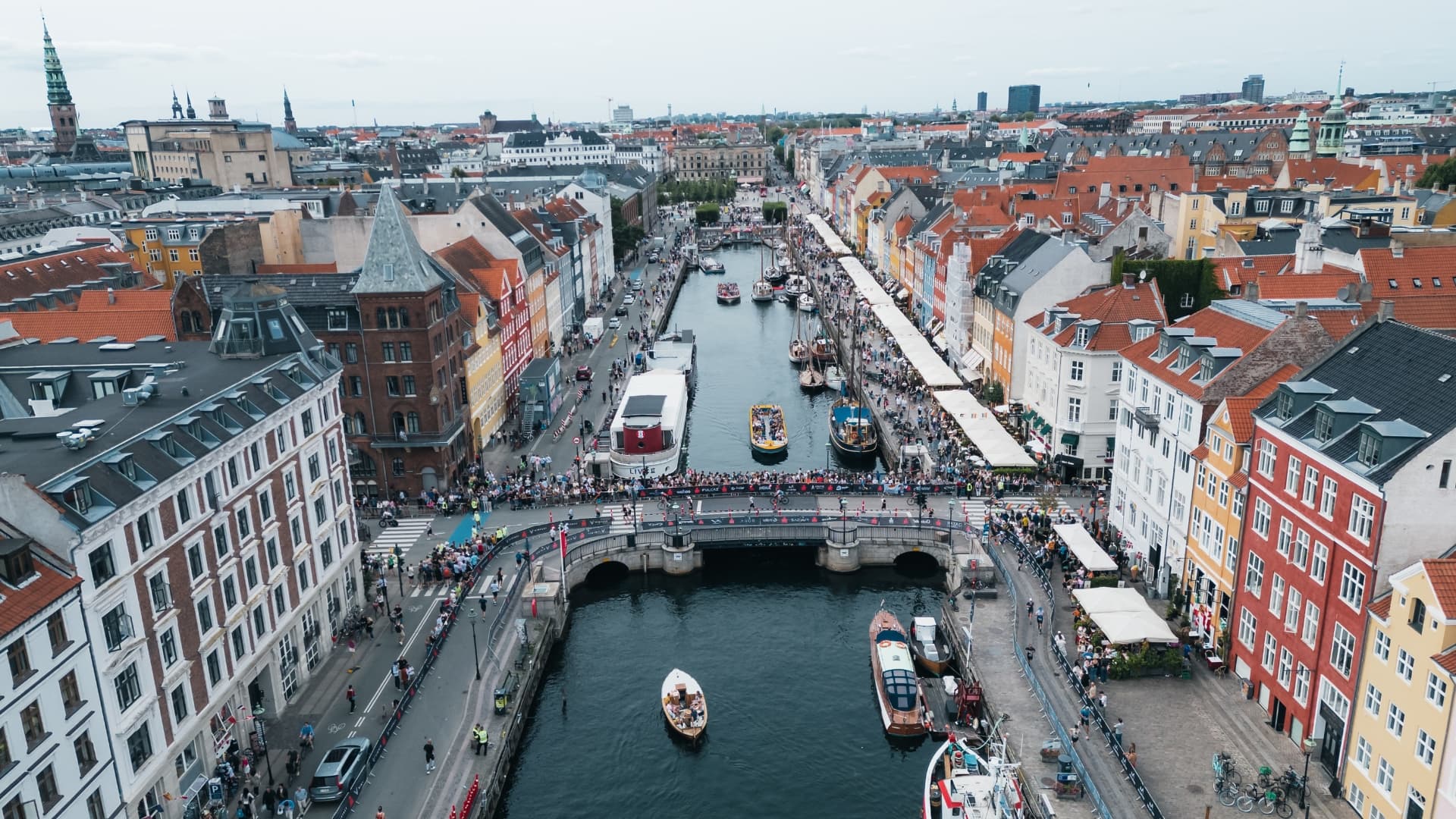
A flat, energetic four-loop marathon showcasing Copenhagen's iconic harbor front, Nyhavn, and Amalienborg Palace. The course is lined with over a hundred thousand spectators, keeping motivation high throughout.
03·Training Timeline
From today to the finish line
24 weeks
This 24-week plan gradually builds the deep aerobic stamina required for your first full-distance finish. It prioritizes sustained flat-course durability on the run and aerodynamic efficiency on the bike to match Copenhagen's unique profile.
Today · WK 0Race Day
WK 1–8
Aerobic Base Building
Establish a consistent training routine and build initial aerobic capacity across all three disciplines.
WK 9–16
Strength & Endurance
Develop muscular endurance with longer rides and flat asphalt runs to handle the repetitive impact.
WK 17–21
Race-Specific Build
Integrate race-pace brick workouts and practice sustained aerodynamic riding in simulated conditions.
WK 22–24
Taper & Sharpen
Reduce training volume while maintaining intensity to peak for race day, ensuring full recovery.
Adapts to your fitness, schedule & recovery every week.
August in Copenhagen averages 21°C but can fluctuate. Use aid station water to cool your head and neck, and wear a visor to block the midday sun along the exposed harbor front.
Fuel & hydration
Target 80-100g of carbohydrates and 600-800ml of fluids per hour on the bike to prepare for the marathon. Take advantage of the frequent, well-stocked city aid stations during the run.
Pacing
Keep your effort controlled on the first bike loop; the flat coastal stretches make it easy to over-ride. Save your legs for the repetitive flat impact of the four-loop marathon where pacing is won or lost.
Gear & logistics
Opt for a mid-to-deep aero wheelset as crosswinds can occur along the coast but are rarely extreme. Arrive in Copenhagen at least three days early to navigate the split transition setup between the swim and city center.
Frequently Asked Questions
What is the water temperature and swim format for IRONMAN Copenhagen?
The swim takes place in the sheltered, calm waters of Amager Strandpark, where water temperatures typically hover around 18°C to 22°C (64°F to 71°F), making it highly likely to be a wetsuit-legal swim. You will start with a rolling beach start, completing a one-loop course that is well-protected from strong ocean currents, making it ideal for both beginners and athletes looking for a fast swim split.
How flat is the IRONMAN Copenhagen bike course?
The two-loop bike course in Copenhagen is exceptionally fast and flat, featuring only about 340 meters (1,115 feet) of total elevation gain per loop. While you will tackle a few short, rolling hills like the famous Geels Bakke, the primary challenge on this scenic countryside route is managing the coastal winds rather than steep climbs.
What is the run course like for IRONMAN Copenhagen?
The run is a highly energetic, four-loop course flatly laid out along the Copenhagen harbor and through the historic city center. You will run on flat, paved roads lined with massive crowds, passing iconic landmarks like the Amalienborg Palace while enjoying unmatched spectator support that will carry you to the finish line.
Where is the best place to stay for IRONMAN Copenhagen?
You should aim to book accommodation in central Copenhagen or near Amager Strandpark to keep logistics simple. Because the race has a split transition—with T1 at the swim start at Amager Strandpark and T2 in the city center at Parliament (Christiansborg Palace)—staying near the metro line allows you to easily navigate between both zones without needing a car.
What should I expect for the weather at IRONMAN Copenhagen in August?
August in Copenhagen typically brings mild and highly favorable racing conditions, with average daytime temperatures ranging from 15°C to 22°C (59°F to 72°F). However, you should prepare for variable conditions, as sudden coastal winds or light summer rain showers are always a possibility in Denmark during late summer.
Your Personalized Plan
Stop guessing your intervals. Train for this course.
FE26 builds your plan around your Strava data, your real schedule, and the exact demands of IRONMAN Copenhagen — then adapts every week to how you actually perform.