IRONMAN HamburgTraining Plan & Race Guide 2026

Hamburg, GermanyJune 7, 2026140.6 mi — Full Distance7 min read

Race & Course Analysis

IRONMAN Hamburg: Course Profile and Training Demands

IRONMAN Hamburg has rapidly established itself as one of the premier destinations on the global circuit, frequently hosting the IRONMAN European Championship. Known for its blistering speeds and the iconic finish line at the historic Rathausmarkt, this race is a "Personal Best" hunter’s dream. The course takes athletes through a stunning 226km (140.6 miles) journey, starting with a freshwater swim in the heart of the city, followed by a pancake-flat bike through the rural marshlands, and concluding with a high-energy marathon around the Alster Lake.

While the profile suggests an "easy" day due to the lack of significant climbing, Hamburg is a race that demands extreme metabolic efficiency and mental discipline. It favors the powerful time-trialist and the high-cadence runner who can maintain a relentless rhythm. To succeed here, your training must shift from conquering vertical gain to mastering sustained, aerodynamic power and the unique physical toll of a course that never lets you coast.

Swim Course

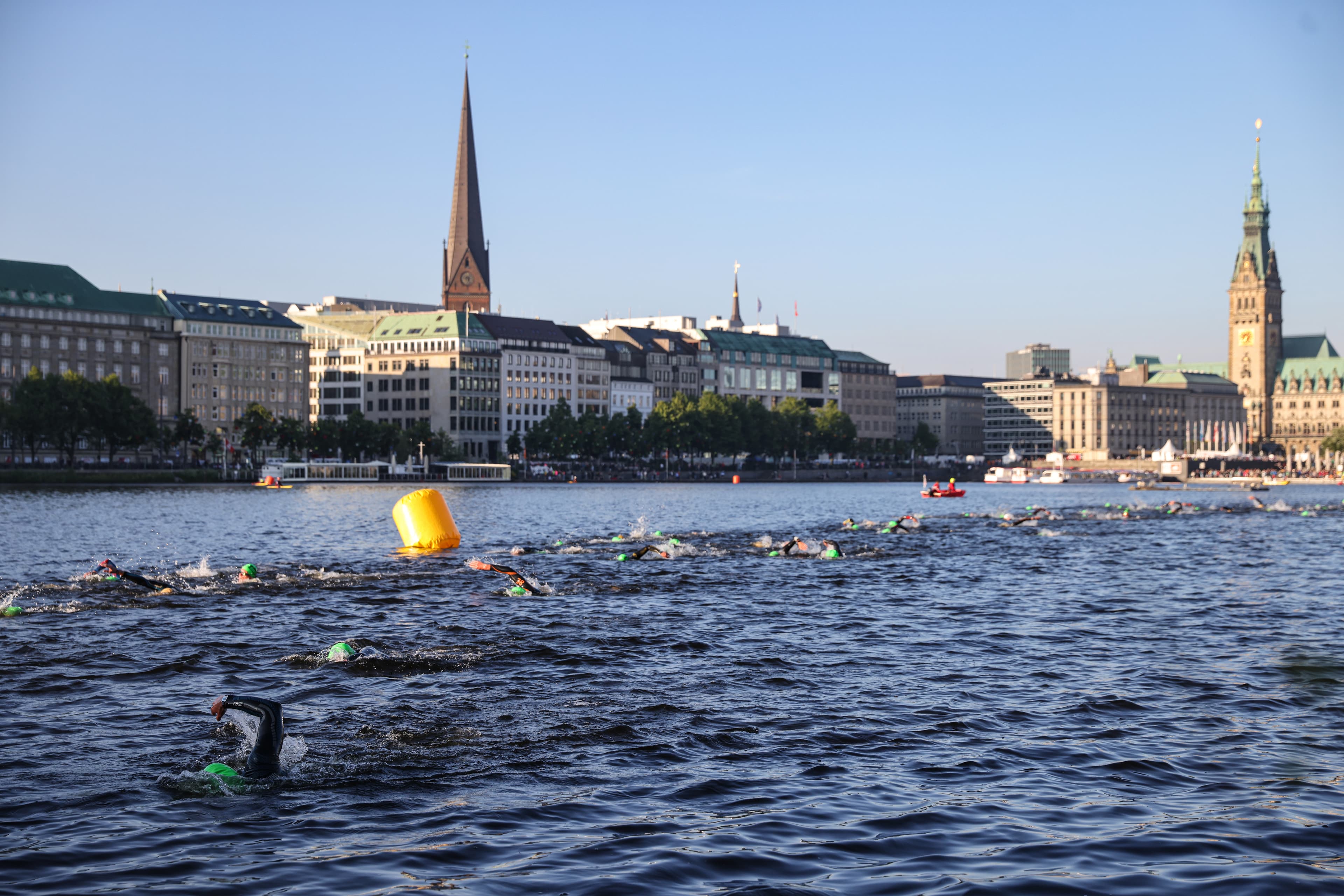
The 3.8km (2.4-mile) swim is a single-loop course held in the Alster (comprising the Binnenalster and Außenalster). Athletes benefit from a rolling start format, which helps spread the field and provides a calm, freshwater experience.

  • Conditions: The water is generally still with negligible currents. Temperatures typically hover between 18°C and 21°C, making it almost certain to be a wetsuit-legal swim.
  • Unique Features: One of the most distinctive aspects of this swim is passing under the Lombardsbrücke and Kennedybrücke. These bridges offer a unique perspective but require focused sighting to maintain a straight line in the wide-open Außenalster.
  • Transition (T1): Athletes should be prepared for one of the longest transitions in the sport. The run from the swim exit to your bike rack can exceed 500 meters.

Training Implication: Your swim sessions should prioritize wetsuit efficiency and open-water sighting. Because the water is calm, focus on building a rhythmic, long-distance stroke. Additionally, incorporate "transition sprints" into your brick sessions to prepare your cardiovascular system for the 500-meter dash from the water to the bike.

Bike Course

The 180km (112-mile) bike course consists of two 90km loops heading south into the "Vier- und Marschlande" region. With a total elevation gain of only 400 to 500 meters, this is objectively one of the fastest bike legs in the world.

  • Terrain & Surface: The roads consist of high-quality asphalt, allowing for high rolling speeds. There are no technical descents or significant climbs—only minor inclines over bridges and dykes.
  • The Wind Factor: While the course is flat, it is highly exposed. On the dykes along the Elbe River, athletes often face headwinds or crosswinds ranging from 15-25 km/h. This can turn a "fast" course into a grueling test of power-to-aero-drag.
  • The "Flatness" Trap: Because there are no descents, there is no opportunity for "micro-recovery." You must pedal for the entire 180km. Staying in an aggressive aerodynamic position for 4.5 to 6 hours often leads to significant lower back and neck fatigue.

Training Implication: Your IRONMAN Hamburg training plan must emphasize "aero-endurance." Include 20- to 30-minute intervals in your long rides where you stay strictly in your aero bars at race cadence. Building a robust core and lower back is essential to withstand the lack of positional variety on this course.

Run Course

The 42.2km (26.2-mile) run is a 4-loop course around the Inner and Outer Alster Lakes. It is 100% flat, featuring a mix of paved city streets and very firm, fine gravel paths.

  • Atmosphere: The run is the highlight for many, lined with thousands of spectators, particularly near Jungfernstieg and the Alsterhaus. The multi-loop format means you are never far from the energy of the crowd.
  • Exposure: While the course is flat and fast, it offers very little shade. If June temperatures rise toward the 24°C (75°F) mark, the sun can become a significant factor during the second half of the marathon.
  • Mental Discipline: A 4-loop course requires high mental resilience. You will pass the finish line area multiple times before you are allowed to enter the red carpet, demanding a disciplined pacing strategy.

Training Implication: Focus your run training on "rhythm endurance." Since there are no hills to change your muscle recruitment, you will be using the same muscle fibers in the exact same way for the entire marathon. Practice long, flat runs at a consistent cadence to prepare your joints and tendons for the repetitive impact of the Hamburg pavement.

Training Phase Timeline

24 weeks

Base Phase

Wk 18 · 8 wk

Build Phase

Wk 916 · 8 wk

Specific Phase

Wk 1721 · 5 wk

Peak Phase

Wk 2223 · 2 wk

Taper Phase

Wk 2424 · 1 wk

Plan Overview

Your journey to the Rathausmarkt begins with a 24-week progression designed to turn the 'easy' Hamburg flats into your fastest performance. You will start by building a robust aerobic engine and the core strength required to hold an aerodynamic position for hours. Since the bike course features only 450m of total elevation, there are no descents to rest your legs; this plan emphasizes constant tension and muscular endurance to ensure you can pedal for 180km without breaks. You will also practice long transition runs to prepare for the unusually long 500-meter trek from the swim exit to your bike. As the race approaches, your training will shift toward managing the environmental demands of the Elbe River dykes and the Alster Lake. You will spend significant time simulating the 15-25 km/h headwinds you will likely face on the bike and the high-repetition, flat 4-loop run. Because the water temperature typically sits around 18-20°C, your swim sessions will focus on wetsuit efficiency to keep you fresh for the fast run ahead. By the time you reach the taper, you will have the mental discipline and physical resilience to conquer one of the world's fastest IRONMAN courses.

Phase 1

Base Phase

Wk 188 weeks

Aerobic foundation and technique

Phase 2

Build Phase

Wk 9168 weeks

Metabolic efficiency and volume progression

Phase 3

Specific Phase

Wk 17215 weeks

Aero endurance and race-pace intervals

Phase 4

Peak Phase

Wk 22232 weeks

Final volume peak and mental discipline

Phase 5

Taper Phase

Wk 24241 week

Recovery and neuromuscular sharpening

Race Day Execution

To nail your IRONMAN Hamburg race day strategy, you must pivot your mindset from "handling terrain" to "managing monotony." This is a high-speed, high-output course where success is determined by aerodynamic discipline and metabolic efficiency.

Weather & Climate Strategy

The primary environmental obstacle in Hamburg is the wind, not the heat. With speeds of 15–25 km/h common along the Elbe River, you must prepare for sustained resistance.

  • Wind Management: Practice riding in crosswinds during your peak phase. On race day, do not "fight" a headwind by spiking your power; maintain your target Watts and accept the lower speed to save your legs for the run.
  • Temperature Regulation: While the 20°C–24°C highs are mild, the humidity can sneak up on you. If it rains, the asphalt remains high-quality, but paint markings on the city turns will be slick.
  • Acclimation: Focus on "Aero-Tolerance." Spend at least 3–4 sessions a week in your aero bars during the final month to ensure your neck and lower back are conditioned for the sustained posture required by the flat terrain.

Nutrition & Hydration Plan

Because the bike course is flat, your heart rate and digestion will likely remain more stable than on a hilly course. Use this to your advantage to maximize caloric intake.

  1. Fueling Targets: Aim for 80–100g of carbohydrates per hour on the bike. The lack of technical descents means you have constant access to your bottles—set a "sip timer" for every 10 minutes to avoid "forgetting" to fuel.
  2. Hydration & Electrolytes: Target 500–750ml of fluid per hour. Even in mild temperatures, the high speeds increase sweat evaporation, which can lead to "silent" dehydration. Include 500–800mg of sodium per liter.
  3. The Run Transition: Your gut might feel "heavy" after 180km of constant pedaling. Switch to gels or chewables for the final 20km of the bike to ensure you’re ready for the 4-loop run around the Alster.

Gear & Transition Setup

Your equipment choices should prioritize aerodynamics and comfort for long-duration static positions.

  • Bike Setup: A deep-section rear wheel or disc wheel is highly recommended. However, if using a deep front wheel, ensure you are comfortable handling it in the 25 km/h gusts expected on the dykes.
  • T1 Strategy (The Long Run): With a 500-meter transition from the swim exit, do not attempt to run in your cycling shoes. Use a "flying mount" if proficient, or carry your shoes to your bike and put them on there.
  • Wetsuit Choice: With water temperatures usually around 18–20°C, a full sleeve wetsuit is optimal for buoyancy and speed.

Pacing & Mental Strategy

At IRONMAN Hamburg, the "easiest" course is often the hardest to pace because there are no natural breaks.

  • Swim Execution: The rolling start at the Binnenalster is calm. Use the bridges as sighting markers. Do not over-kick; the 500m run to T1 requires fresh legs immediately upon exiting the water.
  • Bike Pacing: Your mantra is Steady State. Avoid the temptation to "hammer" the first 90km loop. Because you never stop pedaling, your Total Stress Score (TSS) will accumulate faster than on a hilly course. Hold your target power zone rigidly.
  • Run Discipline: The 4-loop run is a mental game. Break it into four 10.5km segments. Use the massive crowds at Jungfernstieg for an emotional lift, but keep your cadence high and your effort controlled until the final 10km.
  • Common Mistake: Failing to shift positions. Because the course is flat, your pelvis and lower back stay locked in one spot. Every 20 minutes, stand for 10–15 seconds to restore blood flow and relieve pressure.

Travel & Logistics

Hamburg is a highly accessible city, and "simplicity" should be your logistics goal.

  • Arrival: Aim to arrive by Thursday for a Sunday race. This allows time for a brief recon of the bike course—specifically the wind-exposed sections on the dykes.
  • Accommodation: Stay near the Jungfernstieg or Hauptbahnhof. You will be within walking distance of the swim start, T2, and the finish line at Rathausmarkt, eliminating the need for race-morning transport.
  • Transport: Use the S-Bahn or U-Bahn for all travel. It is efficient and bike-friendly during designated hours. Avoid renting a car; parking in the city center during race week is nearly impossible.
  • Recon Tip: Ride the first 20km of the bike course on Friday to familiarize yourself with the technical turns leading out of the city before you hit the open flats.

Your Personalized Training Plan

Your Personal Path to IRONMAN Hamburg

While this guide provides a foundation, every athlete is unique. FE26 creates a personalized plan by analyzing:

  • Your Data: Seamless Strava integration to benchmark your current fitness.
  • Your Life: Training blocks that adapt to your real-world schedule.
  • The Course: Workouts specifically engineered for these unique race demands.
  • Your Recovery: Weekly adaptive periodization that adjusts targets based on your actual performance.

Stop guessing your intervals. Start training with a system that evolves with you.

Create Your IRONMAN Hamburg Training Plan