IRONMAN JacksonvilleTraining Plan & Race Guide 2026
Jacksonville, United StatesMay 16, 2026140.6 mi — Full Distance2 min readPublished April 1, 2026Updated July 4, 2026
Share
01·Course Characteristics
The measure of IRONMAN Jacksonville
A fast downstream swim gives way to a relentless, wind-swept bike and a scorching, shade-free run. Jacksonville tests your thermal tolerance and constant pedaling endurance rather than your climbing legs.
Climate
35°C
Peak air · water 19.4°C · mid-May · high humidity 76%
Conditions
Humid
High heat index · Atlantic headwind · zero run shade
Elevation
266-489 m
Bike gain · flat two-loop · Acosta Bridge exception
Difficulty
7.5 / 10
Fast downriver swim is offset by relentless flat pedaling on the bike and an oppressive, highly exposed run with temperatures peaking at 35°C.
This edition has passed
Training for a future IRONMAN Jacksonville?
Registration for the next edition opens on a rolling basis. Start building your base now and we'll size a full plan the moment a new date is set.
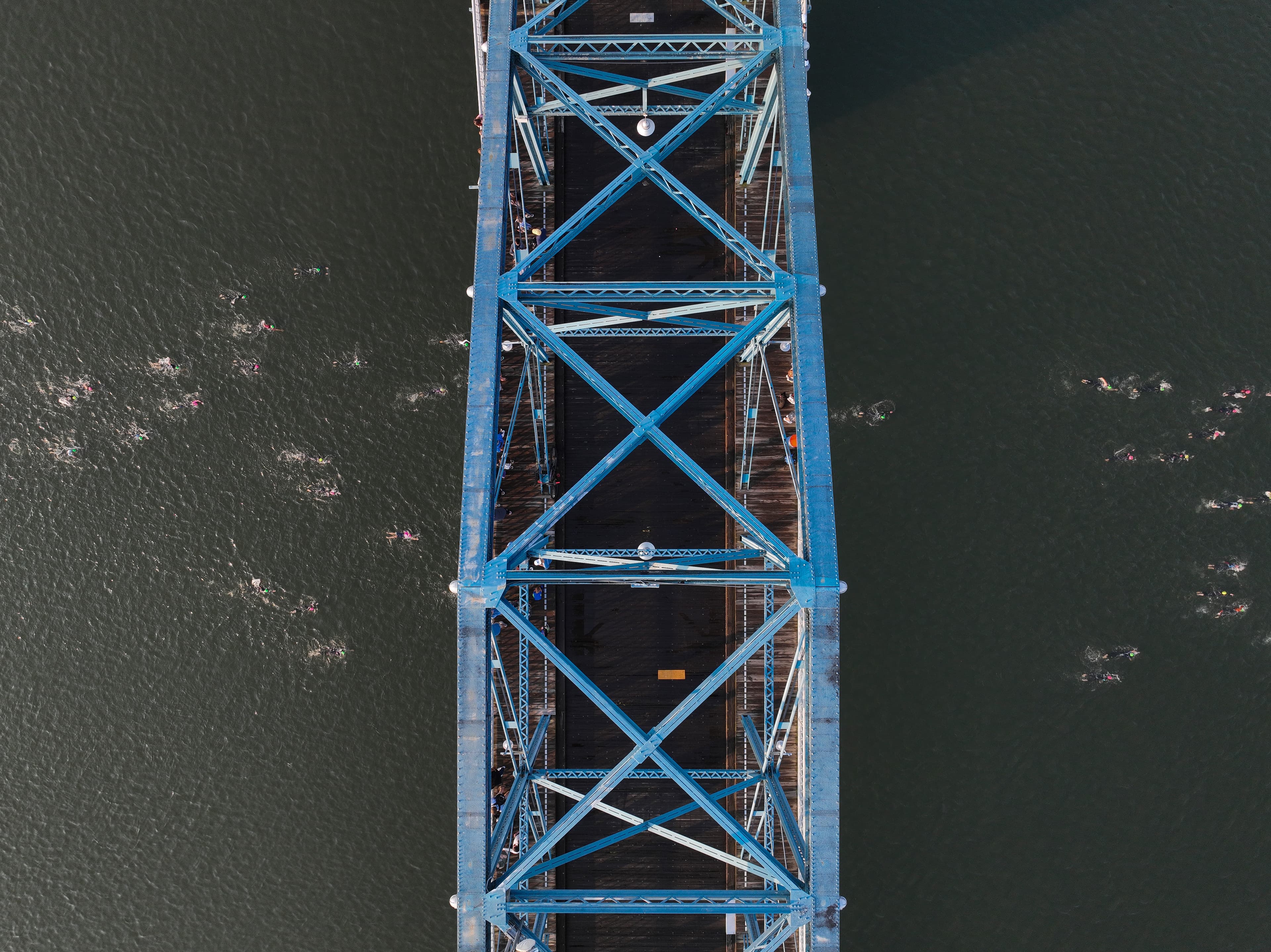
A point-to-point downstream swim starting at Metropolitan Park and ending near Memorial Park. Guided by an incoming tide, athletes experience exceptionally fast times but must carefully navigate river currents around massive bridge pilings.
02
Bike
Flat Constant Pedaling
Duval and St. Johns Counties
DISTANCE
180 km
LOOPS
2
ELEVATION
266-489 m
TERRAIN
Flat & technical
SURFACE
Rough asphalt
WIND
High exposure
A flat, two-loop course featuring early technical 90-degree turns and the brief but steep Acosta Bridge climb. The remainder of the course demands constant, uninterrupted pedaling along exposed, wind-swept highways with rough asphalt.
03
Run
The Exposed Triple Loop
Downtown Jacksonville & Riverside
DISTANCE
42.2 km
LOOPS
3
ELEVATION
91-132 m
SURFACE
Paved & concrete
SHADE
Minimal
PEAK TEMP
35°C
A three-loop marathon traversing historic Riverside, concrete riverwalks, and three taxing crossings of the Main Street Bridge. The course is highly exposed to the intense Florida sun with virtually zero shade during the hottest afternoon hours.
03·AVG beginners' Training Timeline
From zero to the finish line
28 weeks
This 28-week plan is engineered to prepare you for Jacksonville's unique challenges. We front-load foundational aerobic volume before transitioning to specific flat-line pedaling endurance, followed by targeted heat acclimation and joint preparation for the concrete run, culminating in a precision taper.
Today · WK 0Race Day
WK 1–10
Aerobic Foundation
Build a robust aerobic base and initial durability to handle the high-volume training of a full-distance event.
WK 11–18
Relentless Pedaling Endurance
Develop core strength and muscular endurance for continuous, aero-position pedaling with zero coasting.
WK 19–25
Heat & Specific Build
Integrate heat adaptation protocols and long, concrete-simulating runs to prepare for the Florida climate.
WK 26–28
Taper & Sharpen
Reduce volume to shed cumulative fatigue while maintaining high intensity to peak for race day.
Adapts to your fitness, schedule & recovery every week.
With afternoon humidity averaging 76 percent and temperatures peaking at 35°C, prioritize pre-cooling at every single aid station. Utilize ice, cold sponges, and cold water over your head and torso to manage your rising core temperature from the very start of the run.
Fuel & hydration
Carb-load thoroughly with 8 to 10 g of carbohydrates per kg of body weight for 48 hours pre-race. On the course, target 600 to 1,000 mL of fluid and 800 to 1,200 mg of sodium per hour to combat the elevated sweat rates caused by oppressive Florida humidity.
Pacing
Avoid over-biking on the deceptively flat 180 km bike course, which offers no natural rest breaks and demands constant pedaling. Run a highly conservative pace during the first 5 to 10 km of the marathon to prevent early heat illness.
Gear & logistics
Securely mount all nutrition bottles on your bike to prevent them from ejecting on rough highway pavement and sharp turns. Use official race shuttles to travel the 1.5 to 2 miles from the transition zone at Memorial Park to the point-to-point swim start at Metropolitan Park.
Frequently Asked Questions
What is the water temperature and wetsuit policy for the IRONMAN Jacksonville swim?
The swim takes place in the St. Johns River with an average water temperature of approximately 67°F (19.4°C), making it wetsuit legal. Because this point-to-point, 2.4-mile course runs downstream and is aided by an incoming tide, you can expect exceptionally fast swim times. However, you must stay alert and navigate carefully around the currents near the Main Street, Acosta, and Fuller Warren bridge pilings.
How hard is the IRONMAN Jacksonville bike course?
The 112-mile bike course is flat and fast with a total elevation gain of 873 to 1,604 feet, but it is deceptively taxing. Aside from a 5 percent grade climb over the Acosta Bridge in the first mile, you will face flat, exposed stretches that demand constant pedaling with no opportunities to coast. Additionally, you must prepare for rough asphalt on Philips Highway, technical 90-degree turns, and strong headwinds or crosswinds along Nocatee Parkway and the A1A Scenic Highway.
What are the typical weather conditions for IRONMAN Jacksonville in mid-May?
You should prepare for high heat and oppressive humidity, with morning lows of 71°F (21.5°C) rising to a median afternoon high of 87°F (30.5°C) and peaks up to 95°F (35°C). The average humidity of 76 percent severely impairs sweat evaporation, which significantly raises your risk of dehydration and heat illness. The run course is especially challenging as it is almost entirely exposed to the intense Florida sun with virtually no shade.
What nutrition and hydration strategy should I use for IRONMAN Jacksonville?
Due to the extreme heat and humidity, your sweat rate can increase by 15 to 25 percent, meaning you should target 600 to 1,000 mL (20 to 34 oz) of fluid and 800 to 1,200 mg of sodium per hour. Be sure to securely mount all nutrition bottles on your bike to prevent them from ejecting on the rough pavement and sharp 90-degree turns. On the run, prioritize pre-cooling at every aid station with ice, cold sponges, and water while keeping your pace conservative early on to manage your core temperature.
How is the run course laid out for IRONMAN Jacksonville?
The run is a rolling, 26.2-mile, three-loop marathon course on paved city streets, sidewalks, and the concrete Riverwalk. You will traverse historic Riverside, downtown Jacksonville, and cross the blue Main Street Bridge three times, which accounts for the course's 301 to 435 feet of elevation gain. While the course offers almost no shade from the intense sun, the multi-loop format provides incredible spectator support, especially near the Riverfront Plaza finish line.
Your Personalized Plan
Stop guessing your intervals. Train for this course.
FE26 builds your plan around your Strava data, your real schedule, and the exact demands of IRONMAN Jacksonville— then adapts every week to how you actually perform.