IRONMAN New ZealandTraining Plan & Race Guide 2027
Taupo, New ZealandMarch 6, 2027140.6 mi — Full Distance2 min readPublished May 19, 2026Updated July 4, 2026
Share
01·Course Characteristics
Crucible of the Great Lake
A historic test of endurance defined by power-sapping chip-seal roads, strong winds over the volcanic plains, and intense Southern Hemisphere UV exposure.
Climate
24°C
Peak air · water 18-22°C · early March
Conditions
Exposed
Strong winds · rough chip-seal · high UV
Elevation
1100-1400 m
Bike gain · rolling plains · steady town drag
Difficulty
6.5 / 10
Rough chip-seal vibration, afternoon head/crosswinds, and high UV offset the moderate elevation gain.
There's still hope!
Only 22 weeks to go — but it's not too late.
The ideal build for this course is 24 weeks, and you have 22. We'll compress the essentials into your remaining time, prioritizing the demands that matter most on this course to get you to the finish line.
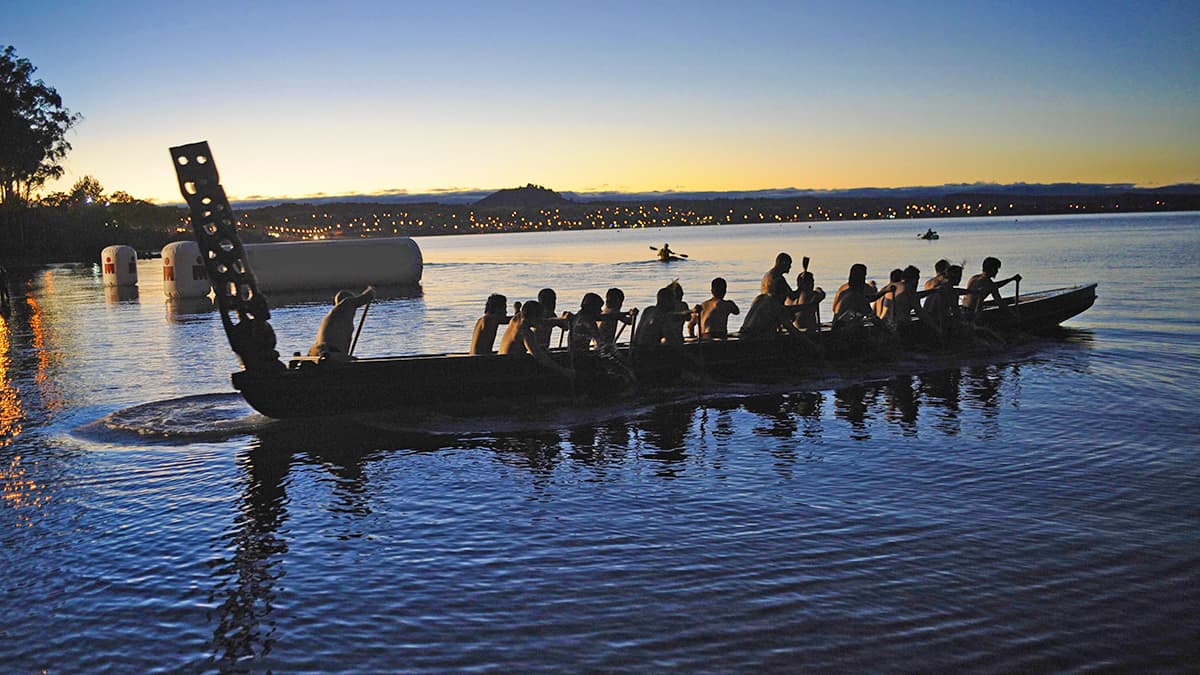
A single-loop deep-water mass start in the crystal-clear waters of the Southern Hemisphere's largest freshwater lake. Navigating involves an easterly stretch before making two turns into a long 2 km straightaway back toward the harbor.
02
Bike
The Chip-Seal Loop
Taupo to Golden Springs
DISTANCE
180 km
LOOPS
2
ELEVATION
1100-1400 m
SURFACE
Coarse chip-seal
WIND
Afternoon winds
A two-loop course heading northeast onto Broadlands and Aratiatia Roads before returning on State Highway 5. The primary challenges are the coarse, power-sapping chip-seal surface and brutal afternoon head- or crosswinds on the return legs.
03
Run
Lakeside and Ridge Loop
Taupo Waterfront to Two Mile Bay
DISTANCE
42.2 km
LOOPS
4
ELEVATION
270-300 m
SURFACE
Path and asphalt
SHADE
Minimal
A highly energetic four-loop run with immense spectator support. The first half of each lap is flat along the lake path, while the second half transitions to undulating roads with short, steep climbs.
03·AVG beginners' Training Timeline
From zero to the finish line
24 weeks
This 24-week plan builds the foundational volume needed for a full-distance finish. It strategically ramps up core strength to combat the high vibrations of the chip-seal road, introduces low-cadence power work for the wind, and culminates in a sharp taper so you arrive fresh.
Today · WK 0Race Day
WK 1–8
Aerobic Foundation & Durability
Build aerobic base and joint resilience to handle the repetitive impact of running and swimming volume.
WK 9–16
Strength & Vibration Resistance
Develop core stability and low-cadence muscular endurance to withstand the power-sapping chip-seal asphalt.
WK 17–21
Race-Specific Build & Wind Prep
Simulate long-course pacing and sustained power efforts against simulated headwinds and undulating terrain.
WK 22–24
Taper & Environmental Prep
Reduce volume to shed fatigue while sharpening speed and preparing for cool morning starts.
Adapts to your fitness, schedule & recovery every week.
Prepare for a chilly 10-12°C start and up to 24°C in the afternoon. With New Zealand's extremely thin ozone layer, apply water-resistant SPF 50+ early and reapply at transition to prevent severe sunburn.
Fuel & hydration
Aim for 80-100 grams of carbohydrates per hour on the bike. Use high-sodium hydration of 500-1000 mg per hour to counter heavy sweat losses from bike vibrations and dry winds.
Pacing
Save energy during the rolling first half of the bike loop to combat the high rolling resistance of the chip-seal. On the run, keep your effort steady on the lakeside path to preserve legs for the steep, rolling hills.
Gear & logistics
Secure all bike bottles with rubber bands to prevent them from ejecting on the rough roads. Pack arm warmers or a windproof gilet for the cold morning bike start and arrive 3-5 days early to acclimatize.
Frequently Asked Questions
What is the water temperature and wetsuit policy for the IRONMAN New Zealand swim?
The swim is held in the pristine freshwater of Lake Taupo, where water temperatures in March typically range between 18°C and 22°C (64°F to 72°F), making the swim wetsuit-legal and highly comfortable. To protect the lake's delicate ecosystem from invasive 'didymo' algae, you must undergo a mandatory wetsuit wash prior to the race. The swim itself features a unique deep-water mass start with exceptional underwater visibility up to 5 meters.
How hard is the IRONMAN New Zealand bike course?
The bike course is moderate to challenging, featuring a two-loop, 180 km route with a total elevation gain of 1,100 to 1,400 meters. The physical toll of the ride is significantly amplified by the energy-sapping, highly resistant New Zealand 'chip-seal' road surface and strong afternoon headwinds or crosswinds on the return legs. To survive the bumpy roads, you should secure your hydration bottles with rubber bands and prepare your legs for the steady drag back to town from the Wairakei Valley.
What is the weather like for ANZCO Foods IRONMAN New Zealand in March?
You can expect highly variable but generally pleasant late-summer weather in Taupo, starting with a chilly 10°C to 12°C (50°F to 54°F) morning and warming to an afternoon peak of 18°C to 24°C (64°F to 75°F). Because the volcanic Central Plateau is highly exposed, you should prepare for strong afternoon winds on the bike and an extremely high UV index due to New Zealand's thin ozone layer. Wearing arm warmers or a windproof gilet is highly recommended for the chilly morning bike start.
What is the run course profile and elevation like for IRONMAN New Zealand?
The 26.2-mile marathon is a spectator-friendly, four-loop course with a total cumulative elevation gain of 270 to 300 meters. The first half of each lap is scenic and flat as it follows the Lake Taupo waterfront, while the second half transitions onto undulating main roads with short, steep pitches toward the Two Mile Bay Yacht Club. There is minimal shade along the route, meaning sun protection is vital to combat the intense solar radiation.
What nutrition and hydration strategy should I use for the Taupo bike course?
Despite the mild air temperatures, the vibrations from the rough chip-seal roads and high UV exposure demand a high-sodium hydration strategy of 500 to 1000 mg of sodium per hour to prevent cramping. You should target a high carbohydrate intake of 80 to 100 grams per hour (approximately 650g total) on the flatter sections to sustain your power against the high rolling resistance. On-course nutrition stations will provide Mortal Hydration, Maurten gels, water, and bananas.
Your Personalized Plan
Stop guessing your intervals. Train for this course.
FE26 builds your plan around your Strava data, your real schedule, and the exact demands of IRONMAN New Zealand— then adapts every week to how you actually perform.