IRONMAN Subic Bay PhilippinesTraining Plan & Race Guide 2026
Subic Bay, PhilippinesJune 7, 2026140.6 mi — Full Distance2 min readPublished April 22, 2026Updated July 23, 2026
Share
01·Course Characteristics
Conquering the tropical crucible of Subic
An extreme test of thermal management and mental resilience. The blistering tropical heat, suffocating humidity, and a warm ocean swim demand meticulous pacing and execution from start to finish.
Climate
33°C
Peak air · water 29°C · early June monsoon transition
Conditions
Oppressive
High humidity · exposed highway wind · intense UV
Elevation
1000 m
Bike gain · rolling expressway · mostly flat run
Difficulty
9 / 10
Extreme heat and humidity combined with a warm, non-wetsuit swim make this one of the most physically demanding full-distance races globally.
This edition has passed
Training for a future IRONMAN Subic Bay Philippines?
Registration for the next edition opens on a rolling basis. Start building your base now and we'll size a full plan the moment a new date is set.
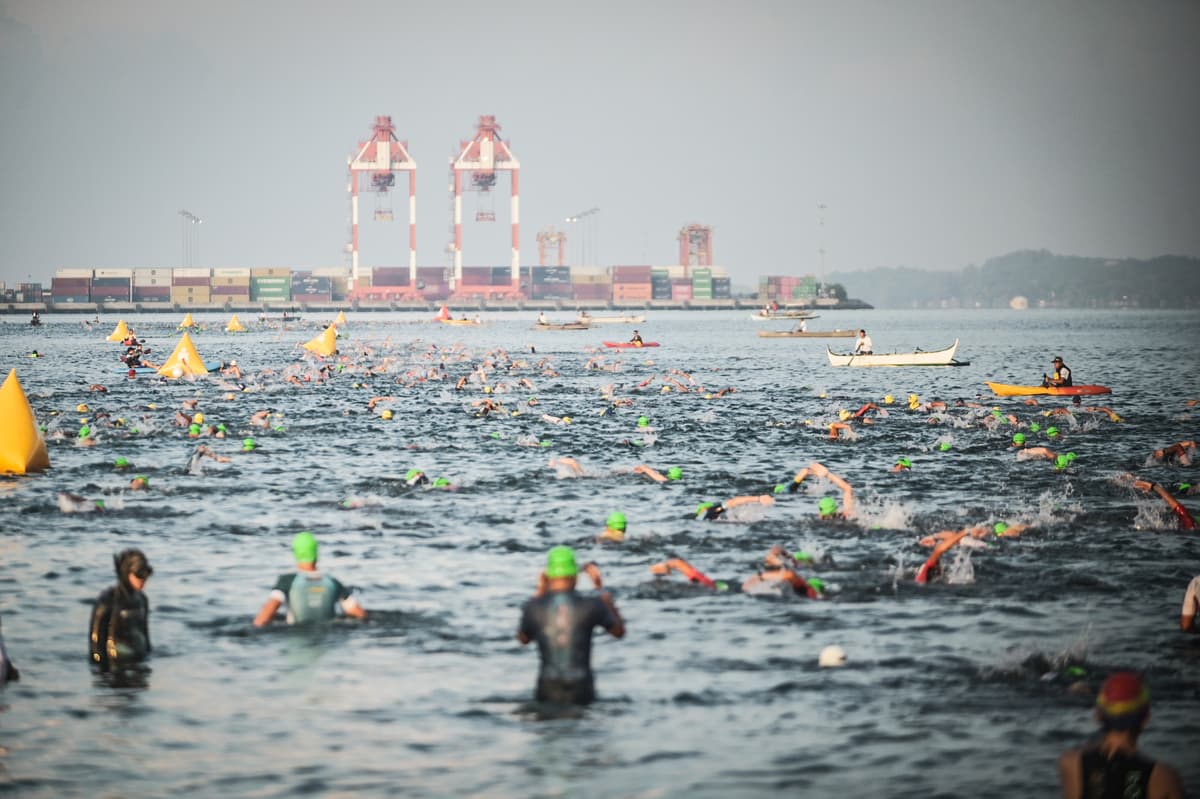
A warm-water, two-loop swim starting from the Boardwalk. Sightings can be challenging depending on morning glare, and the high water temperature will raise your core temperature early.
02
Bike
SCTEX Expressway
Subic-Clark-Tarlac Expressway
DISTANCE
180 km
LOOPS
2 loops
ELEVATION
1000 m
TERRAIN
Rolling highway
SURFACE
Smooth asphalt
WIND
Moderate crosswinds
A fast but deceptive two-loop ride along the wide-open, fully exposed SCTEX highway. You will face rolling hills, minimal shade, and relentless headwinds on the return legs.
03
Run
The Freeport Zone Loop
Subic Bay Freeport Zone
DISTANCE
42.2 km
LOOPS
3 loops
ELEVATION
Minimal
SURFACE
Concrete and asphalt
SHADE
Very minimal
PEAK TEMP
33°C
A flat, multi-loop run through the Freeport area under punishing midday sun. The concrete surfaces radiate heat, turning this final leg into a pure battle against dehydration.
03·AVG beginners' Training Timeline
From zero to the finish line
24 weeks
This 24-week progression systematically prepares your body for the unique environmental stresses of Subic Bay. We build a deep aerobic engine first, transition into sustained strength to handle the rolling expressway, and dedicate the final block to heat acclimation and strategic tapering.
Today · WK 0Race Day
WK 1–8
Aerobic Foundation
Build baseline endurance and joint durability with flat, steady-state volume.
WK 9–14
Strength & Heat Prep
Introduce low-cadence climbing efforts and non-wetsuit swimming efficiency.
WK 15–20
Specific Build
Replicate exposed SCTEX bike efforts and execute long, high-temperature brick workouts.
WK 21–24
Acclimation & Taper
Execute specific heat-immersion protocols while systematically reducing training volume.
Adapts to your fitness, schedule & recovery every week.
With a heat index exceeding 38°C, cooling is your primary focus. Put ice under your tri-suit at every aid station, use cold sponges on your neck, and wear a white, highly breathable race kit.
Fuel & hydration
Sweat rates will be exceptionally high. Aim for 800 to 1000 ml of fluid per hour loaded with 800 to 1000 mg of sodium, and maintain 80 to 90 grams of carbohydrates per hour primarily from liquid or gel sources.
Pacing
Reduce your target power on the bike by 5 to 10 percent to prevent early heat stroke. On the run, execute a conservative run-walk strategy from kilometer one; do not chase pre-heat target paces.
Gear & logistics
Equip your bike with deep-section wheels, but be prepared for crosswinds on the expressway. Arrive in Subic Bay at least 5 to 7 days before the race to allow your body to naturally adapt to the tropical climate.
Frequently Asked Questions
What is the expected water temperature for the IRONMAN Subic Bay Philippines swim?
You can expect warm tropical water temperatures ranging from 28°C to 30°C (82°F to 86°F) for the swim in Subic Bay. Because of these high temperatures, the swim is strictly non-wetsuit for age-group athletes, so you should practice your swim pacing in a standard trisuit or swimskin.
How difficult and hilly is the IRONMAN Subic Bay Philippines bike course?
The bike course features a mix of flat sections and rolling hills, primarily taking you onto the Subic-Clark-Tarlac Expressway (SCTEX). While the road surfaces are generally smooth, you must prepare for significant highway crosswinds and a hot, exposed ride with almost no shade. Pacing your effort and staying on top of your hydration during these windy stretches is critical for a strong run.
What are the typical weather conditions for IRONMAN Subic Bay in June?
In June, Subic Bay experiences extreme tropical heat and high humidity, with daytime temperatures frequently climbing between 31°C and 34°C (88°F to 93°F). There is also a strong possibility of sudden monsoon rain showers or afternoon thunderstorms. Your training must prioritize heat acclimatization and a highly structured sweat-rate-tested hydration strategy.
What is the run course terrain like for IRONMAN Subic Bay Philippines?
The run course is predominantly flat and held on paved roads around the Subic Bay Freeport Zone, featuring multiple loops that offer great spectator support. However, the combination of midday heat, high humidity, and radiant heat from the asphalt makes it incredibly challenging. Success on this run depends on utilizing every aid station for ice, water, and core cooling.
When should I arrive in the Philippines for the June 7, 2026 race?
It is highly recommended to arrive in Subic Bay at least 5 to 7 days before the race on June 7, 2026. This buffer allows your body to adjust to the intense tropical humidity, recover from international travel or jet lag, and complete a few crucial heat-adaptation workouts on the local roads.
Your Personalized Plan
Stop guessing your intervals. Train for this course.
FE26 builds your plan around your Strava data, your real schedule, and the exact demands of IRONMAN Subic Bay Philippines— then adapts every week to how you actually perform.