Vichy, FranceAugust 23, 2026140.6 mi — Full Distance2 min readPublished April 5, 2026Updated July 4, 2026
Share
01·Course Characteristics
The heat and hills of Vichy
Prepare for a race defined by a highly demanding, hilly bike course with 2,300 m of climbing, followed by a flat run in intense late-August heat often exceeding 35°C.
Climate
32°C
Peak air · water 19-22°C · late August
Conditions
Exposed
Sunny & high UV · light to moderate wind · minimal swim current
Elevation
2,300 m
Bike gain · demanding loops · long 16 km climb
Difficulty
7.5 / 10
Challenging 2,300 m bike climbing combined with high likelihood of extreme afternoon heat and a potential non-wetsuit swim
This edition has passed
Training for a future IRONMAN Vichy?
Registration for the next edition opens on a rolling basis. Start building your base now and we'll size a full plan the moment a new date is set.
A single-loop, rectangular swim in a calm, fresh, dammed reservoir of the Allier River. Excellent sighting and minimal currents make this a very friendly swim, though rising water temperatures can often ban wetsuits.
02
Bike
Montagne Bourbonnaise Loops
Vichy to Montagne Bourbonnaise
DISTANCE
180.2 km
LOOPS
2 loops plus lead-out
ELEVATION
2,300 m
TERRAIN
Hilly and demanding
SURFACE
Smooth asphalt
WIND
Light to moderate
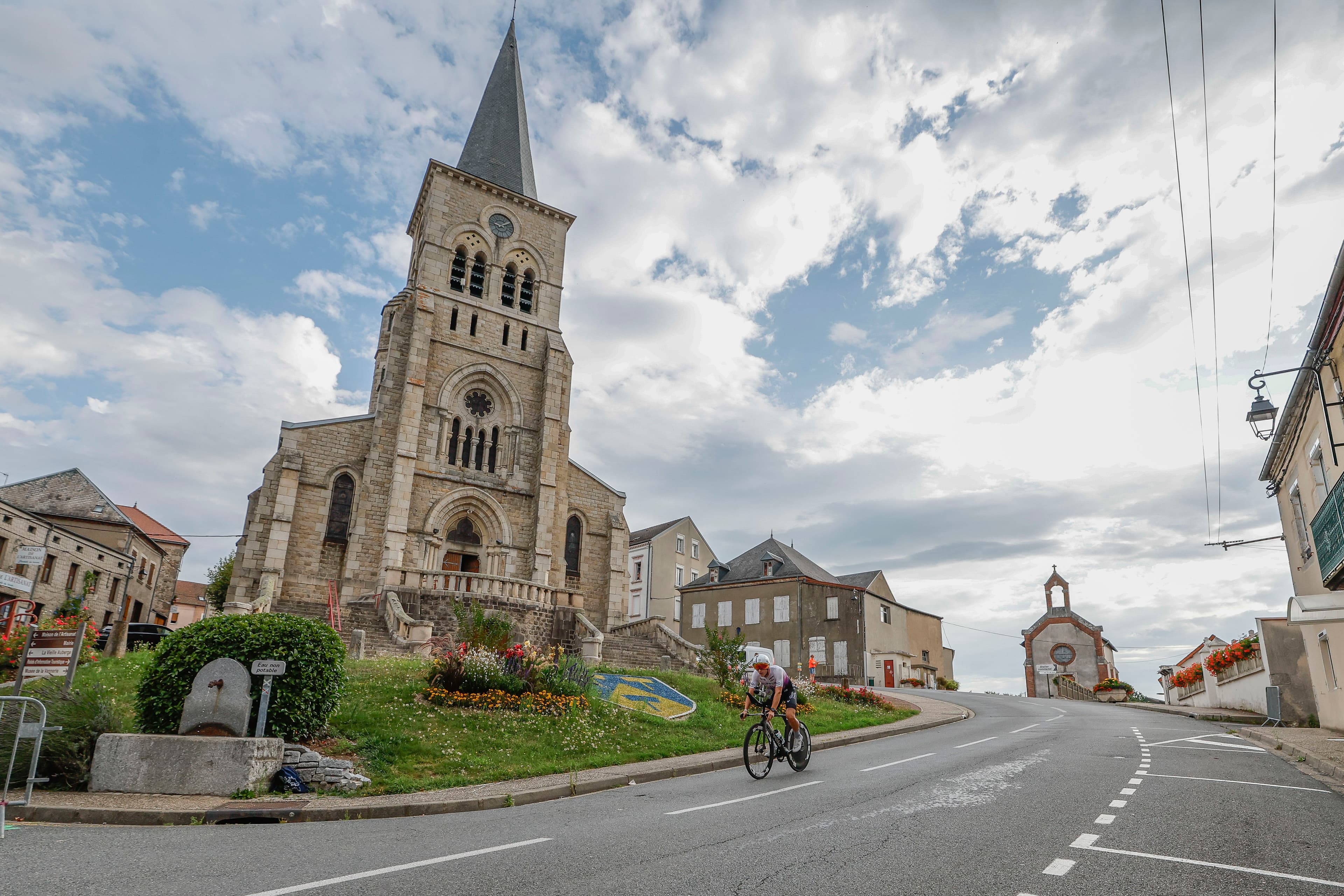
After a flat 15 km lead-out along the Allier River, you will tackle a hilly and demanding course featuring two 72 km loops. Each loop contains a grinding 16 km climb up to Saint-Nicolas-des-Biefs on high-quality French asphalt.
03
Run
The Spa Town Marathon
Vichy Historic Streets & Parks
DISTANCE
42.2 km
LOOPS
4 loops
ELEVATION
96 m
SURFACE
Asphalt and cobblestones
SHADE
Partial
PEAK TEMP
28-32°C
An extremely flat 4-loop marathon along the banks of the Allier River and through the historic spa town of Vichy. While shaded in parts by mature trees, the late-afternoon heat, humidity, and passing the finish chute three times pose severe mental and physical challenges.
03·AVG beginners' Training Timeline
From zero to the finish line
24 weeks
This 24-week progression is specifically designed to prepare you for Vichy's combination of significant bike climbing and intense late-August heat. We build your aerobic engine first, transition into targeted power work for the 16 km climbs, and finish with heat-specific race-pace simulations to ensure you survive the grueling afternoon marathon.
Today · WK 0Race Day
WK 1–8
Aerobic Foundation
Establish aerobic capacity and core swimming and cycling endurance.
WK 9–16
Strength & Climbing Power
Develop specific climbing efficiency to handle the 2,300 m of bike elevation.
WK 17–21
Specific Peak & Heat Build
Simulate race-pace efforts in hot conditions and execute critical long brick sessions.
WK 22–24
Taper & Sharpen
Reduce training volume to shed fatigue while maintaining intensity for a peak performance.
Adapts to your fitness, schedule & recovery every week.
Prepare for extreme heat that can exceed 35°C. Actively lower your core temperature by pouring cold water over your head and body at the four run aid stations per lap, and wear a white, breathable race kit.
Fuel & hydration
Execute a sweat-rate test in hot conditions during training to tailor your hydration. Target 60-90g of carbs per hour on the bike, matched with 500-1000 mg of sodium per liter of fluid to combat the intense late-August heat.
Pacing
Manage your effort conservatively during the flat 15 km bike lead-out and save your legs for the 16 km climb to Saint-Nicolas-des-Biefs. Avoid over-pacing early on the flat run, as the afternoon heat and humidity will severely punish early over-exertion.
Gear & logistics
Arrive in central Vichy early and book accommodation immediately, as the town fills up quickly. Pack a deep-section front wheel to handle plateau winds on the bike, and bring shoes suitable for brief cobblestone sections on the run.
Frequently Asked Questions
How hard is the IRONMAN Vichy bike course?
The bike course is highly demanding with a 7.5 out of 10 overall difficulty rating, featuring approximately 2,300 meters (7,545 feet) of climbing. After a flat 15 km lead-out, you will tackle two loops through the Montagne Bourbonnaise, which include the 4.1 km 'Côte de la Bruyère' and a long, grinding 16 km climb up to Saint-Nicolas-des-Biefs. The smooth French asphalt is high quality, but the constant rolling profile leaves very few opportunities to coast.
What is the water temperature and wetsuit policy for the IRONMAN Vichy swim?
Water temperatures in Lac d'Allier typically average between 19°C and 22°C (66°F–72°F) but can often climb to 25°C–26°C due to late-August heat. If the water temperature rises above the legal limit of 24.6°C (76.2°F), wetsuits will not be permitted for age-group athletes. You should prepare in training for both wetsuit and non-wetsuit scenarios in this calm, fresh, river-fed lake.
What is the weather like on race day for IRONMAN Vichy?
The weather is typically very hot and sunny with high UV exposure, with afternoon temperatures averaging between 28°C and 32°C (82°F–90°F). However, late-August heatwaves in Vichy are common and can push air temperatures up to a grueling 35°C–38°C (95°F–100°F). While wind is usually light in the valleys, it can pick up on the exposed plateaus of the bike course and along the riverbanks.
What nutrition and hydration strategy should I use for IRONMAN Vichy?
Due to intense heat that often exceeds 30°C to 35°C, you must execute a sweat-rate test in hot conditions during training to establish a custom hydration plan. Target 60 to 90 grams of carbohydrates per hour on the bike, combined with 500 to 1,000 mg of sodium per liter of fluid depending on your individual sweat rate. Make sure to utilize the 8 bike and 4 run aid stations per lap, and pour cold water over your head to keep your core temperature down.
How do I travel to Vichy and where should I stay for the race?
The closest airport is Clermont-Ferrand (CFE), a 45-minute drive away, while Lyon (LYS) is about 2 hours and Paris (CDG) is a 4-hour drive. You can also take a direct 3-hour train from Paris Gare de Bercy to Vichy railway station. It is highly recommended to book central accommodations like the Vichy Célestins Spa Hôtel or Mercure Vichy Opéra immediately, as the town of 25,000 residents quickly fills up with over 4,000 competitors.
Your Personalized Plan
Stop guessing your intervals. Train for this course.
FE26 builds your plan around your Strava data, your real schedule, and the exact demands of IRONMAN Vichy— then adapts every week to how you actually perform.