IRONMAN Vitoria-GasteizTraining Plan & Race Guide 2026
Vitoria-Gasteiz, SpainJuly 12, 2026140.6 mi — Full Distance2 min readPublished April 5, 2026Updated July 4, 2026
Share
01·Course Characteristics
The speed of Vitoria-Gasteiz
A legendary European course defining speed and support, balancing a glassy lake swim and fast, rolling pavement with exposed afternoon winds and late-day historic run cobbles.
Climate
28°C
Peak afternoon air · water 18-22°C · mid-July climate
Conditions
Exposed
Open plains headwind · direct afternoon sun · moderate humidity
Elevation
1166 m
Rolling bike gain · flat run course
Difficulty
6 / 10
Beginner friendly with a calm lake and flat run, but challenged by afternoon heat and bike headwinds.
This edition has passed
Training for a future IRONMAN Vitoria-Gasteiz?
Registration for the next edition opens on a rolling basis. Start building your base now and we'll size a full plan the moment a new date is set.
A crystal-clear, drinking-quality freshwater swim in a sheltered forest-lined setting. Sighting is simple with large buoys, but you may face morning sun glare on the outward stretch. Kick actively in the final 200m to prime your legs for the exit.
02
Bike
The Álava Plains
Landa to Vitoria-Gasteiz
DISTANCE
180.2 km
LOOPS
2.5 loops
ELEVATION
1166 m
TERRAIN
Rolling and fast
SURFACE
Premium smooth asphalt
WIND
Afternoon head/crosswinds
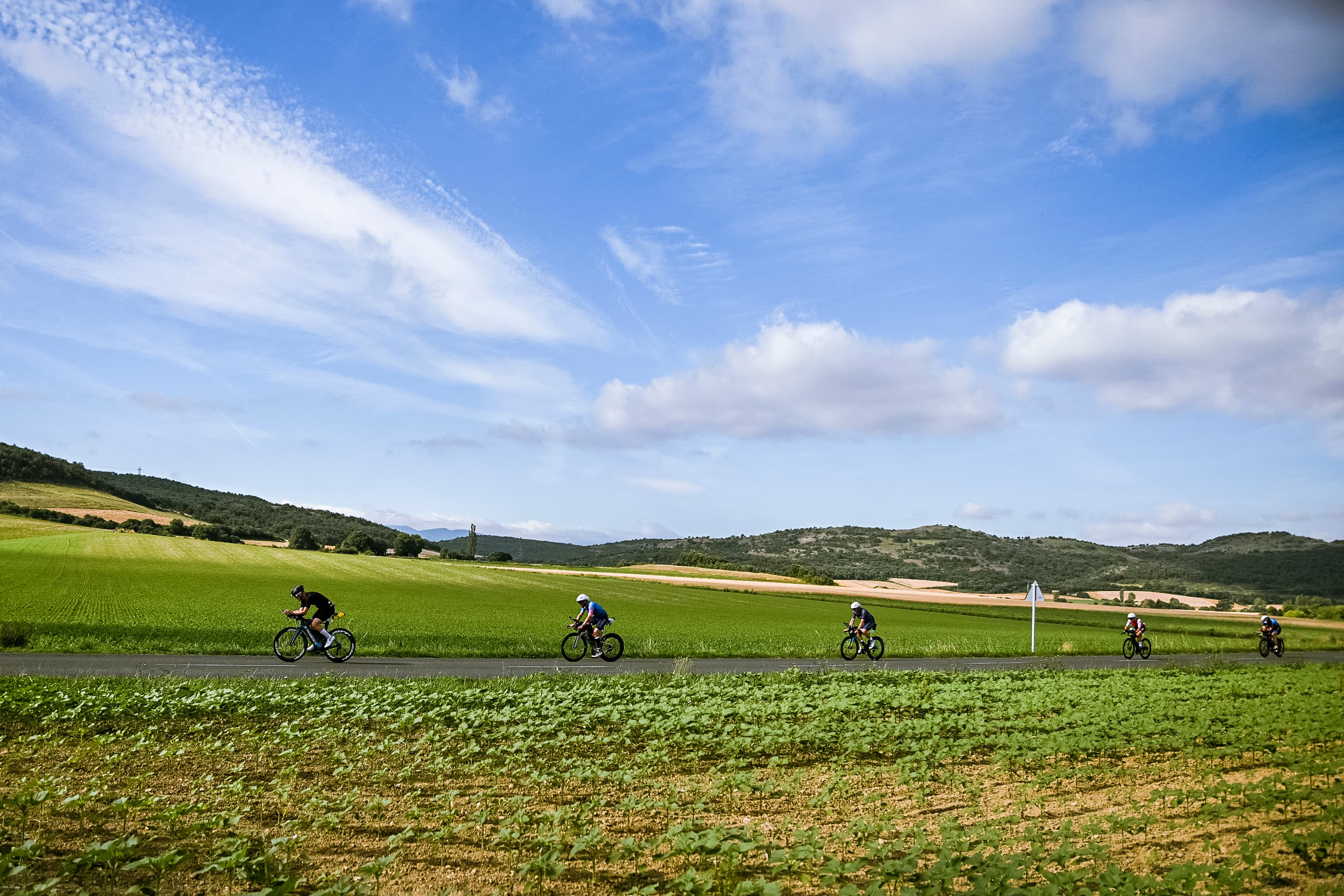
A fast, rolling layout on exceptionally smooth tarmac with three ascents of a short, punchy 8% climb. High wind exposure on the open plains can generate gusty headwinds that demand smart pacing.
03
Run
The Historic Marathon
Vitoria-Gasteiz City Center
DISTANCE
42.2 km
LOOPS
4 loops
ELEVATION
59 m
SURFACE
Asphalt and cobbles
SHADE
Scattered
PEAK TEMP
28°C
A flat four-loop urban marathon winding through city parks and the historic old town, finishing at Plaza España. While highly spectator-supported, it features brief cobblestone segments and high sun exposure.
03·AVG beginners' Training Timeline
From zero to the finish line
24 weeks
This 24-week plan progresses your aerobic base before tailoring your power for the rolling bike course and flat marathon. You will develop aerodynamic durability and specific thermal strategies to handle the open winds and afternoon heat of Vitoria-Gasteiz.
Today · WK 0Race Day
WK 1–8
Aerobic Foundation
Build base aerobic volume across all three disciplines to prep for high-volume work.
WK 9–16
Strength & Aero Efficiency
Develop riding comfort in your aerodynamic tuck and build fatigue resistance.
WK 17–21
Race-Specific Build
Incorporate long brick workouts and practice sustained race-pace efforts.
WK 22–23
Peak & Specificity
Simulate race-day fueling, heat prep, and high-cadence climbing efforts.
WK 24
Taper & Sharpen
Reduce volume significantly while keeping short pacing efforts to peak fresh.
Adapts to your fitness, schedule & recovery every week.
Expect cool 13°C morning temperatures rising to a warm 28°C in the afternoon. Use every aid station on the run to douse your head and body with cold water and ice to stay ahead of the heat.
Fuel & hydration
Target 80-100 grams of carbs and 500-1000 mg of sodium per hour on the bike. Take advantage of the exceptionally smooth roads to sip regularly from your aero bottle without breaking your aero tuck.
Pacing
Keep your power in check during the fast, flat sections of the bike. Spin up the repeated 8% rollers in an easy gear to protect your legs for the marathon, where you must pace the first half conservatively.
Gear & logistics
Select a highly cushioned running shoe to damp the jarring cobblestone segments. Ensure your gear bags are correctly distributed at the split transitions on Saturday, and take the official athlete shuttle to Landa on race morning.
Frequently Asked Questions
How hard is the IRONMAN Vitoria-Gasteiz bike course?
The 180.2 km bike course has a moderate difficulty rating of 6 out of 10, featuring a rolling layout with 1,166 meters of elevation gain and no high mountain climbs. It is exceptionally fast due to its premium, smooth asphalt, though you must tackle a short 0.5 km climb peaking over 8% gradient three times and a brief 10% drag near the end. Pacing is key on this course, as high wind exposure on the open plains of Álava can cause fatiguing headwinds if you push too hard early.
What is the water temperature for the IRONMAN Vitoria-Gasteiz swim?
The water temperature in Lake Ullibarri-Gamboa typically averages between 18°C and 22°C (64°F to 72°F) in July, making wetsuits almost always legal for age-group athletes. The swim takes place in crystal-clear, calm freshwater at an altitude of 550 meters, meaning you will face virtually no currents or ocean chop. Sighting is straightforward along the single-loop horseshoe course, though you should prepare for some morning sun glare on the outward stretch.
How does the split transition work at IRONMAN Vitoria-Gasteiz?
This race uses a point-to-point split transition where T1 is located 20 km outside the city at Landa Provincial Park and T2 is in the historic city center of Vitoria-Gasteiz. You must drop off your Blue (bike) bag at T1 and your Red (run) bag at T2 during bike check-in on Saturday. On race morning, you will need to take the official event shuttle buses from the city center to reach the swim start at Lake Landa.
What is the run course like at IRONMAN Vitoria-Gasteiz?
The HOKA run course is a flat, fast four-loop urban marathon through the historic city center and green parks, featuring only 59 meters of total elevation gain. The terrain is mostly paved asphalt, but you will encounter brief, jarring sections of historic cobblestones in the old town that require cushioned, stable shoes. While shade is provided by buildings and trees, open squares are heavily exposed to afternoon temperatures that can reach 28°C (82°F) or more.
What nutrition is available on the IRONMAN Vitoria-Gasteiz course?
Aid stations are highly accessible, located every 20 km on the bike course and every 2 km on the run. They are stocked with water, electrolytes (Precision Hydration/Gatorade), Maurten energy gels, and cola to help you maintain your target intake of 80-100 grams of carbs per hour. Note that the special needs station on the run is placed mid-lap around the 25-26 km mark rather than at the standard half-marathon point.
Your Personalized Plan
Stop guessing your intervals. Train for this course.
FE26 builds your plan around your Strava data, your real schedule, and the exact demands of IRONMAN Vitoria-Gasteiz— then adapts every week to how you actually perform.