IRONMAN Western AustraliaTraining Plan & Race Guide 2026
Busselton, AustraliaDecember 6, 2026140.6 mi — Full Distance2 min readPublished July 1, 2026Updated July 23, 2026
Share
01·Course Characteristics
Chasing Speed on the Western Coast
Busselton offers a deceptive challenge: a pancake-flat profile requiring relentless pedaling with zero muscular relief, combined with severe afternoon head/crosswinds and intense UV exposure.
Climate
30°C
Peak air · water 19-22°C · early December
Conditions
Windy
Severe afternoon sea breeze · high UV 11+ · no run shade
Elevation
430 m
Bike gain · pancake flat · zero run elevation
Difficulty
5.8 / 10
Flattest profile globally but elevated to moderate difficulty by relentless non-stop pedaling, 12 momentum-killing U-turns, severe afternoon winds, and intense UV.
There's still hope!
Only 9 weeks to go — but it's not too late.
The ideal build for this course is 28 weeks, and you have 9. We'll compress the essentials into your remaining time, prioritizing the demands that matter most on this course to get you to the finish line.
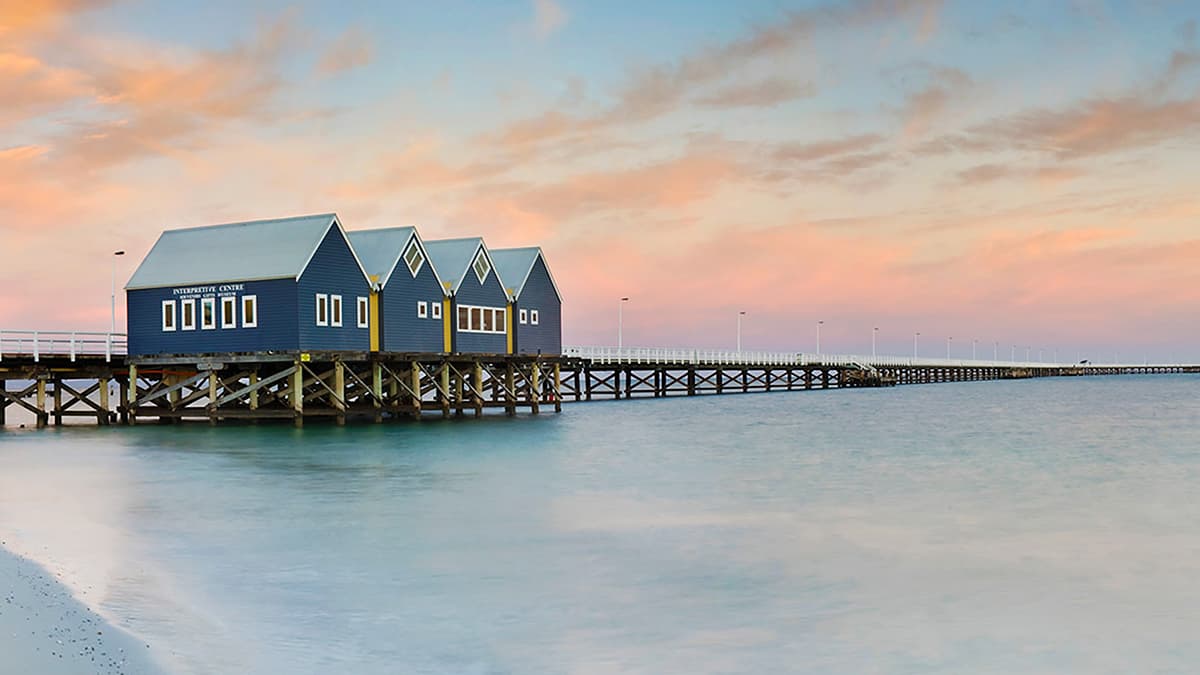
A two-loop self-seeded swim starting from the beach in the calm, clear waters of Geographe Bay. You will swim underneath the famous Busselton Jetty on the first lap, complete a brief sand-run Aussie Exit, and return for your second loop.
02
Bike
The Forest and Coast
Busselton to Tuart Forest
DISTANCE
180 km
LOOPS
2 loops
ELEVATION
430 m
TERRAIN
Pancake flat
SURFACE
High-quality asphalt & chip seal
WIND
Severe afternoon sea breeze
A flat, fast two-loop course heading coastal before entering the Tuart Forest National Park. The main tactical challenge comes from 12 total sharp U-turns and the brutal Fremantle Doctor sea breeze bringing 15-25 knot winds on the second lap.
03
Run
The Foreshore Marathon
Busselton Foreshore along Geographe Bay
DISTANCE
42.2 km
LOOPS
4 loops
ELEVATION
<15 m
SHADE
Minimal to none
PEAK TEMP
23-30°C
A completely flat four-loop run hugging the paved coastal paths of the Busselton Foreshore. With zero shade, you will face intense, direct sun exposure during peak afternoon heat alongside phenomenal spectator support.
03·AVG beginners' Training Timeline
From zero to the finish line
28 weeks
This 28-week plan is customized for Busselton's flat yet demanding profile. It focuses early on building endurance to handle continuous pedaling, progresses to sustained aero position holds, and culminates in high-torque turn recoveries and wind simulation work to prepare you for the brutal second half of the bike.
Today · WK 0Race Day
WK 1–8
Aerobic Base & Core Strength
Build the foundational swim, bike, and run volume to prepare your joints for continuous, flat-terrain loading.
WK 9–16
Muscular Endurance & Aero Tolerances
Develop the core and neck strength required to hold a constant aerodynamic position for hours without muscular relief.
WK 17–24
Specific Wind & Turn Prep
Introduce high-torque efforts mimicking the 12 U-turns and long intervals matching the resistance of coastal headwinds.
WK 25–28
Taper & Heat Mitigation
Reduce volume to shed fatigue while executing race-pace simulations in hot conditions.
Adapts to your fitness, schedule & recovery every week.
Expect high UV indices exceeding 11+ and temperatures up to 30°C or more. Douse yourself with water and ice at every run aid station, and use cool water-rich foods like watermelon to lower your core temperature.
Fuel & hydration
With high wind-induced sweat evaporation, bring your own concentrated electrolyte and carb formulas to avoid weak on-course mixes. Consume your main calories during the low-speed 180-degree bike U-turns where you can safely sit up.
Pacing
The flat bike profile demands continuous pedaling with no coasting, which causes hidden leg fatigue. Keep power output strictly controlled on the first lap, saving energy to fight the heavy 15-25 knot afternoon headwinds on the second lap.
Gear & logistics
Book your Busselton accommodation up to 11 months early to secure walking distance to Signal Park. Fly to Perth and drive 2.5 hours, and select deep-section wheels carefully due to strong crosswinds along the coast.
Frequently Asked Questions
What is the water temperature and wetsuit policy for the IRONMAN Western Australia swim?
Water temperatures in Geographe Bay typically average a comfortable 19 to 22 degrees Celsius (66 to 71 degrees Fahrenheit) in early December, which means wetsuits are almost always legal. You will swim a 2-loop coastal course featuring a beach-landing 'Aussie Exit' and a passage underneath the iconic Busselton Jetty, where you should prepare for saltwater, high visibility, and potential ocean chop.
How hard is the IRONMAN Western Australia bike course?
While it is physically the flattest bike course on the global circuit with only 430 meters of total elevation gain, it is highly deceptive. The lack of hills means you must pedal continuously with zero opportunity to coast, leading to deep muscular fatigue in your legs. Additionally, you must manage 12 sharp, momentum-killing 180-degree U-turns and potentially brutal afternoon head/crosswinds of 15 to 25 knots from the 'Fremantle Doctor' sea breeze.
What are the running conditions and terrain like for the IRONMAN Western Australia marathon?
The marathon is a flat, 4-loop pavement course hugging the Busselton Foreshore with less than 15 meters of total elevation gain. Because there is minimal to no shade, you will face intense sun exposure and high UV indexes (often 11+) in afternoon temperatures ranging from 23 to 30 degrees Celsius. Keeping a highly consistent pace, staying mentally strong through the four loops, and utilizing aid stations to douse yourself with water and ice are key to finishing strong.
What nutrition and hydration strategy should I use for IRONMAN Western Australia?
Because of the high UV index, dry heat, and strong winds that rapidly evaporate your sweat, aggressive hydration and electrolyte management are critical. We recommend carrying your own concentrated formulas, like Maurten or Tailwind, rather than relying solely on on-course sports drinks. For your digestive comfort, space out your solid calorie intake around the slow, technical 180-degree U-turns on the bike, and use watermelon at run aid stations.
How do I get to Busselton for IRONMAN Western Australia and where should I stay?
You can fly into Perth Airport (PER) and make the scenic 2.5-hour drive (220 km) south to Busselton, or book a direct regional flight to Busselton Margaret River Airport (BQB). It is highly recommended to book your accommodation up to 11 months in advance within walking distance of Signal Park to avoid race-morning parking hassles. Once the race is over, reward yourself by exploring the world-class Margaret River wine region just 25 minutes away.
Your Personalized Plan
Stop guessing your intervals. Train for this course.
FE26 builds your plan around your Strava data, your real schedule, and the exact demands of IRONMAN Western Australia— then adapts every week to how you actually perform.