IRONMAN World ChampionshipTraining Plan & Race Guide 2026
Kona, United StatesOctober 10, 2026140.6 mi — Full Distance2 min readPublished April 5, 2026Updated July 4, 2026
Share
01·Course Characteristics
The Crucible of Kailua-Kona
Kona is the ultimate test of endurance, where extreme humidity, intense solar radiation, and punishing crosswinds turn a physically manageable course into a brutal psychological battle.
Climate
35°C
Peak air · water 26.4-26.7°C · early October
Conditions
Extremely Exposed
Lava field radiant heat · severe crosswinds · high humidity
Elevation
1,772 m
Bike gain · rolling hills · sustained climb to Hawi
Difficulty
10 / 10
Brutal rating driven by intense heat, extreme humidity, and punishing crosswinds that act as invisible enemies to trigger severe dehydration and GI distress.
There's still hope!
Only 2 weeks to go — but it's not too late.
The ideal build for this course is 28 weeks, and you have 2. We'll compress the essentials into your remaining time, prioritizing the demands that matter most on this course to get you to the finish line.
A single clockwise rectangular loop in Kailua Bay starting and ending at the historic Kailua Pier. Expect ocean swell, chop, and strong currents particularly around the turnaround boat. Sighting on the return leg is exceptionally challenging due to the blinding morning sun.
02
Bike
The Queen K and Hawi
Queen Ka'ahumanu Highway to Hawi
DISTANCE
180.2 km
LOOPS
Single out-and-back
ELEVATION
1,772 m
TERRAIN
Rolling hills
SURFACE
Asphalt
WIND
Severe crosswinds
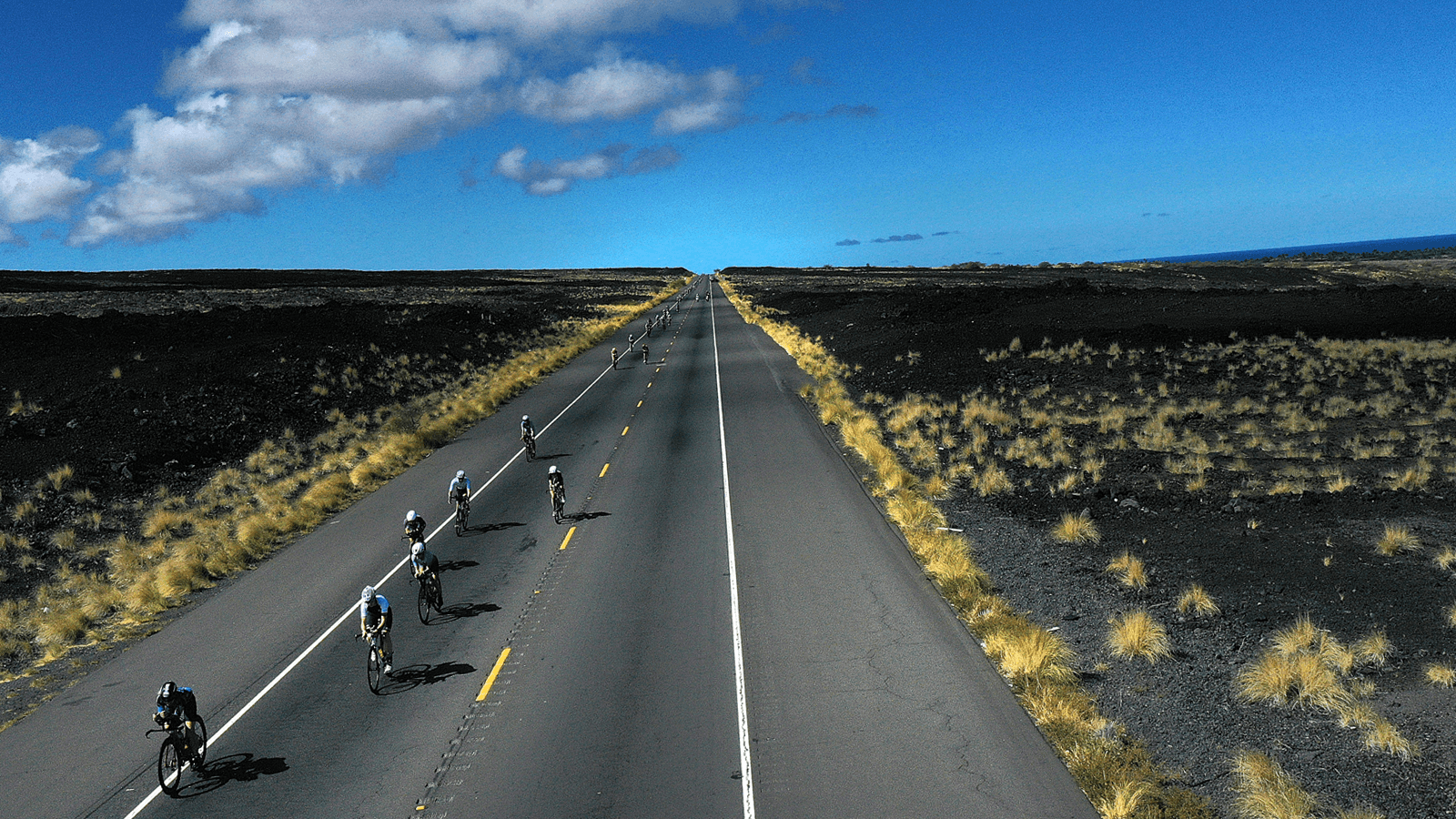
A legendary route through barren black lava fields heading north to the turnaround in Hawi. The course features relentless rolling hills, a sustained climb to Hawi, and powerful crosswinds that prohibit the use of disc wheels. The surrounding lava fields act as a giant radiator, pushing felt temperatures past 38°C.
03
Run
The Energy Lab Crucible
Ali'i Drive and the Queen K Highway
DISTANCE
42.2 km
LOOPS
Single out-and-back
ELEVATION
307 m
SURFACE
Asphalt
SHADE
None
PEAK TEMP
35°C
Starting with a rolling stretch on Ali'i Drive, the marathon climbs the steep Palani Road onto the completely exposed highway. The infamous, desolate Natural Energy Lab section between miles 16 and 20 presents a massive psychological and physiological barrier with intense heat radiating from the asphalt.
03·AVG beginners' Training Timeline
From zero to the finish line
28 weeks
This 28-week structure progressively prepares you for Kona's harsh conditions. By laying a deep aerobic foundation first, we then layer on the specific muscular endurance needed for Hawi's winds and the rigorous heat preparation required to survive the Energy Lab marathon.
Today · WK 0Race Day
WK 1–8
Aerobic Foundation
Build core cardiovascular endurance and basic swim skin tolerance over low-intensity sessions.
WK 9–16
Strength & Heat Prep
Develop cycling torque for rolling hills and introduce initial heat-acclimation protocols.
WK 17–24
Race-Specific Build
Execute long simulation brick workouts focusing on hydration, high-sodium intake, and pacing in windy conditions.
WK 25–28
Taper & Sharpen
Reduce volume to shed cumulative fatigue while maintaining short high-intensity efforts to stay sharp.
Adapts to your fitness, schedule & recovery every week.
With ambient temperatures up to 35°C and 85% morning humidity, core cooling is critical. Stuff ice under your cap and down your suit at every single aid station, and walk through them to ensure thorough cooling before running again.
Fuel & hydration
Target 1 liter of fluids and 700 to 1000 mg of sodium per hour on the bike to counter extreme sweat rates. Stick to easily digestible liquid carbohydrates or gels at 80 to 100 grams per hour as high core temperatures will compromise solid food digestion.
Pacing
Hold back during the first half of the bike and save energy for the brutal headwind sections returning from Hawi. Do not over-invest on the steep Palani Road climb; keep your heart rate under control to survive the heat of the Energy Lab.
Gear & logistics
Disc wheels are strictly prohibited, so opt for deep-section front and rear wheels that you can confidently handle in strong gusts. Wear a white or highly reflective tri-suit, a high-quality swimskin, and bring polarized or tinted goggles to combat the blinding morning sun on the swim return.
Frequently Asked Questions
What is the water temperature and wetsuit policy for the IRONMAN World Championship swim?
The water temperature in Kailua Bay typically averages between 79.5°F and 80.1°F (26.4°C to 26.7°C), meaning wetsuits are strictly prohibited. You will need to wear a standard tri-suit or a high-quality swimskin for the 2.4-mile ocean swim. Because you will swim directly into the morning sun on the 1.2-mile return leg, we highly recommend wearing tinted or polarized goggles to help with sighting.
How hard is the IRONMAN World Championship bike course and what is the elevation gain?
The 112-mile bike course is exceptionally brutal, rated a 10 out of 10 for difficulty due to intense heat, high humidity, and powerful Ho’omumuku crosswinds. The single-loop route features rolling terrain through barren lava fields with a sustained climb to the turnaround in Hawi, accumulating an official total elevation gain of 5,814 feet (1,772 meters). Because of the extreme wind danger, disc wheels are strictly prohibited on this course.
What are the typical weather conditions for the Kona IRONMAN?
You should prepare for a very hot, humid, and highly exposed race day, with daytime air temperatures reaching 85°F to 95°F (29°C to 35°C). Humidity ranges from 80-85% in the morning to 40-50% in the afternoon, and the black asphalt and lava fields can radiate heat exceeding 100°F (38°C). Intense solar radiation and severe winds, particularly near Hawi, add to the extreme environmental challenges.
How should I manage my nutrition and hydration during the Kona run?
To combat soaring core temperatures on the 26.2-mile run, you should walk the aid stations to ensure proper intake of water, cola, and salt, while keeping your shoes dry to prevent blistering. Load up on ice at every single opportunity, stuffing it under your cap and down your tri-suit to actively cool your body. Pacing and cooling are critical as you tackle the steep climb up Palani Road and the famously hot, desolate Energy Lab section.
What is the schedule and format for the 2026 IRONMAN World Championship?
The 2026 race will take place on Saturday, October 10, 2026, in Kailua-Kona, Hawaii. This historic event marks the official return of a unified, single-day format where nearly 3,000 professional and age-group men and women will compete together. Both Transition 1 and Transition 2 will be centrally located at the landmark Kailua Pier.
Your Personalized Plan
Stop guessing your intervals. Train for this course.
FE26 builds your plan around your Strava data, your real schedule, and the exact demands of IRONMAN World Championship— then adapts every week to how you actually perform.